
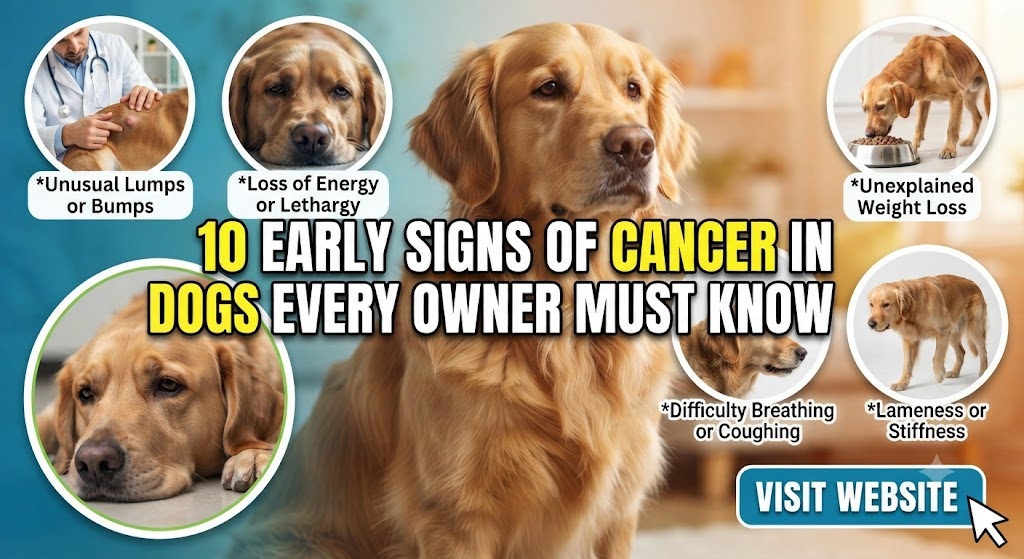
The Silent Threat: A Comprehensive Guide to Early Dog Cancer Symptoms Every Owner Must Know
Cancer is a word that strikes fear into the heart of every pet owner. It is a diagnosis that feels like a weight, a shadow cast over the joyous bond between a human and their canine companion. However, in the world of veterinary oncology, there is one weapon more powerful than the most advanced chemotherapy or the most precise surgical laser: Early Detection.
Statistics show that approximately one in four dogs will develop some form of neoplasia in their lifetime, and for dogs over the age of ten, that number jumps to nearly 50%. While these figures are daunting, they are not a death sentence. Many canine cancers are highly treatable, and some are even curable, provided they are caught before they have the chance to metastasize or invade vital organs.
Understanding the subtle, often overlooked early symptoms of dog cancer is the most important responsibility of a proactive pet parent. This guide explores the “red flags” that require immediate veterinary attention, the specific signs associated with different types of cancer, and how you can become your dog’s best health advocate.
Why Early Detection is the “Holy Grail” of Veterinary Medicine
In dogs, as in humans, cancer is essentially a malfunction of cellular growth. Cells begin to divide uncontrollably, forming masses or circulating through the blood and lymphatic systems. The problem with cancer in dogs is that our pets are biologically programmed to hide their pain. This is a survival instinct inherited from their wolf ancestors—showing weakness in the wild makes an animal a target.
By the time a dog is visibly “acting sick”—refusing food, lethargic, or crying out—the cancer has often progressed to an advanced stage. Early detection aims to catch the disease during the “pre-clinical” phase, when the tumor is small and localized.
The benefits of early detection include:
- More Treatment Options: Smaller tumors are easier to remove surgically with “clean margins.”
- Lower Costs: Treating an early-stage growth is significantly less expensive than managing systemic disease.
- Better Quality of Life: Early intervention often prevents the painful complications associated with tumor growth and organ failure.
The 10 Most Common Warning Signs (The Red Flags)
The Veterinary Cancer Society has identified several key warning signs that every dog owner should memorize. If you notice any of these, schedule a veterinary appointment immediately.
1. New or Changing Lumps and Bumps
Not every lump is cancerous. Many dogs, especially as they age, develop fatty tumors called lipomas. However, you cannot tell the difference between a harmless lipoma and a malignant mast cell tumor just by feel.
- The Rule of Thumb: If a lump is the size of a pea and stays for more than a month, or if it is growing rapidly, it needs a Fine Needle Aspirate (FNA).
2. Abnormal Odors
While “dog breath” is common, an unusually foul odor coming from the mouth, ears, or genital area can be a sign of a tumor. Cancerous tissue often undergoes necrosis (tissue death), which produces a distinct, putrid smell.
3. Non-Healing Wounds
If your dog has a sore or a scratch that refuses to heal despite treatment with antibiotics or ointments, it may not be an infection at all. Skin cancers or underlying systemic cancers can interfere with the body’s ability to repair tissue.
4. Unexplained Weight Loss
If your dog is losing weight but you haven’t changed their diet or exercise routine, alarm bells should go off. Cancer cells are “metabolic thieves”—they consume a massive amount of the body’s energy and nutrients to fuel their own rapid growth.
5. Change in Appetite
A sudden loss of interest in food (anorexia) or difficulty swallowing (dysphagia) can indicate tumors in the mouth, throat, or digestive tract. Conversely, some cancers of the pancreas can cause a strange, ravenous hunger.
6. Persistent Coughing or Respiratory Distress
A dry, hacking cough that doesn’t go away could be a sign of lung cancer or the spread of another cancer to the lungs. It could also indicate a tumor pressing against the trachea or heart.
7. Lethargy and Depression
While all dogs slow down as they age, a sudden “loss of zest” is a major red flag. If your dog no longer wants to go for walks or play with their favorite toy, they may be dealing with internal pain or the systemic fatigue caused by malignancy.
8. Changes in Bathroom Habits
Blood in the urine, difficulty urinating, or chronic diarrhea/constipation can indicate tumors of the bladder, kidneys, or intestines. Pay close attention to “straining” during elimination.
9. Evidence of Pain or Lameness
Bone cancer (osteosarcoma) is incredibly painful. If your dog starts limping or seems stiff, don’t just assume it’s arthritis. Bone tumors often cause a visible swelling on the leg that is warm to the touch.
10. Persistent Swelling or Bloating
A sudden “pot-bellied” appearance in a dog that isn’t overeating can indicate a large internal tumor (often on the spleen or liver) or the accumulation of fluid in the abdomen (ascites) caused by cancer.
Decoding Specific Cancers: Symptoms by Type
To truly protect your dog, it helps to know the specific profiles of the most common canine malignancies.
Lymphoma (The Cancer of the Immune System)
Lymphoma is one of the most common cancers in dogs. It affects the lymph nodes and the lymphatic system.
- Early Sign: The most classic sign is the painless swelling of the lymph nodes. You can feel these under the jaw, in front of the shoulders, and behind the knees. They will feel like firm, rubbery marbles under the skin.
Hemangiosarcoma (The Silent Killer)
This is a highly aggressive cancer of the blood vessel linings, most commonly affecting the spleen or heart.
- Early Sign: This cancer is notoriously difficult to catch because it stays internal. The “early” signs are often subtle episodes of weakness or pale gums that resolve on their own (indicating a small internal bleed that the body reabsorbed). If your dog “collapses” and then seems fine an hour later, this is an emergency.
Mast Cell Tumors (The Great Imitator)
Mast cell tumors (MCTs) are the most common skin cancer in dogs. They are called “The Great Imitator” because they can look like anything: a wart, a bug bite, a simple cyst, or a red inflamed patch.
- Early Sign: A lump that fluctuates in size. Because mast cells release histamines, the tumor may swell up and get red, then shrink back down. Never ignore a “disappearing” lump.
Osteosarcoma (Bone Cancer)
Primarily affecting large and giant breeds, this cancer is aggressive and moves fast.
- Early Sign: A subtle limp that is often mistaken for a sprain. Unlike a sprain, the pain of osteosarcoma does not improve with rest and often worsens at night.
Melanoma (Oral and Skin Cancer)
While skin melanomas in dogs are often benign, oral melanomas are highly malignant.
- Early Sign: Drooling, blood in the water bowl, or a foul odor from the mouth. If you see a dark pigmented spot on the gums or tongue that is raised, have it checked immediately.
Subtle Signs You Might Be Overlooking
Beyond the major red flags, there are “micro-symptoms” that pet owners often dismiss as signs of “just getting older.”
- Increased Thirst (Polydipsia): Certain cancers, such as Lymphoma or Anal Sac Adenocarcinoma, cause high calcium levels in the blood, which triggers excessive thirst and urination.
- Difficulty Swallowing: If your dog drops food while eating or tilts their head strangely to swallow, there may be a mass in the esophagus or at the base of the tongue.
- Eye Changes: A sudden cloudiness in one eye or a change in the color of the iris can indicate an intraocular tumor.
- Exercise Intolerance: If a dog that used to run for miles now pants heavily after a block, it could indicate anemia or a thoracic mass related to cancer.
The Breed Factor: Know Your Dog’s Genetic Risk
While any dog can get cancer, certain breeds have a significantly higher genetic predisposition. If you own one of these breeds, you must be doubly vigilant.
- Golden Retrievers: High risk for Hemangiosarcoma and Lymphoma.
- Boxers: Extremely prone to Mast Cell Tumors and Brain Tumors.
- German Shepherds: High incidence of Hemangiosarcoma.
- Bernese Mountain Dogs: Predisposed to Histiocytic Sarcoma (a very aggressive cancer).
- Great Danes and Rottweilers: High risk for Osteosarcoma (bone cancer).
- Scottish Terriers: Significantly higher risk for Bladder Cancer (Transitional Cell Carcinoma).
If your dog is a high-risk breed, talk to your vet about screening schedules, including regular ultrasounds or specific blood tests like the “liquid biopsy” tests now entering the market.
The Monthly “Nose-to-Tail” At-Home Exam
You are the person who knows your dog best. You touch them, groom them, and play with them every day. This puts you in the best position to spot changes. Once a month, perform a dedicated physical exam:
- The Head: Check the eyes for clarity. Look inside the mouth at the gums (they should be pink) and under the tongue. Smell the ears.
- The Neck and Shoulders: Feel for the lymph nodes. Run your hands down the neck to the chest.
- The Torso: Run your hands along the ribcage. Feel the abdomen—it should be soft, not tucked up or hard.
- The Back and Hips: Feel along the spine for any new bumps. Check the area around the base of the tail.
- The Legs and Paws: Feel each leg for swelling or heat. Check between the toes and look at the nail beds.
- The Skin: Part the fur to look for any redness, crusting, or dark spots.
Pro-Tip: Use a “Body Map.” Draw a simple outline of a dog on a piece of paper. If you find a lump, mark it on the map with the date and its size (e.g., “June 1st: Pea-sized bump on left hip”). This helps you track changes over time.
Diagnostic Innovations: How Vets Find Cancer
If you find a symptom, what happens next? Veterinary medicine has advanced rapidly, borrowing many technologies from human oncology.
- Fine Needle Aspirate (FNA): A tiny needle is inserted into a lump to suck out cells for microscopic evaluation. This is the first step for any skin mass.
- Cytology vs. Histopathology: Cytology looks at individual cells, while histopathology looks at a whole piece of tissue. Histopathology is more accurate for grading the cancer.
- Digital Radiography (X-rays): Used to look for tumors in the lungs or changes in the bone.
- Ultrasound: Crucial for looking at internal organs like the spleen, liver, and bladder.
- CT Scans and MRI: These provide 3D images and are vital for surgical planning and detecting brain or spinal tumors.
- Liquid Biopsy (CADET or OncoK9): These are new blood or urine tests that can detect cancer DNA before a tumor is even visible on an X-ray.
Myths About Dog Cancer
To protect your pet, you must discard outdated information.
- Myth: “If it doesn’t hurt, it’s not cancer.”
- Fact: Many malignant tumors are completely painless in the early stages. Waiting for a lump to “bother” the dog is often waiting too long.
- Myth: “He’s too young to have cancer.”
- Fact: While cancer is more common in seniors, certain types (like Lymphoma or Bone Cancer) can and do occur in puppies and young adults.
- Myth: “Cancer is a death sentence, so why test?”
- Fact: This is the most dangerous myth. Many cancers can be managed as chronic diseases, similar to diabetes or heart disease, giving dogs years of high-quality life.
Hope and Treatment in the Modern Age
If the worst happens and your dog is diagnosed with cancer, it is important to realize that veterinary oncology is not the same as human oncology.
In human medicine, the goal is often a “cure at all costs,” which can involve very harsh treatments. In veterinary medicine, the primary goal is Quality of Life.
- Chemotherapy in dogs is usually administered at lower doses than in humans. Most dogs do not lose their hair, and most do not experience the severe nausea humans do.
- Immunotherapy (like the Melanoma vaccine) helps the dog’s own immune system fight the cancer.
- Palliative Care focuses on pain management and comfort, ensuring that your dog’s final months or years are filled with joy rather than suffering.
Proactive Prevention: Can You Lower the Risk?
While you cannot prevent every case of cancer (genetics play a huge role), you can tip the scales in your dog’s favor.
- Maintain a Lean Weight: Obesity causes chronic inflammation, which is a known driver of cancer.
- Minimize Toxin Exposure: Be cautious with lawn chemicals (herbicides and pesticides have been linked to bladder cancer) and secondhand smoke.
- High-Quality Diet: Feed a diet rich in antioxidants and Omega-3 fatty acids, which help support the immune system.
- Delayed Neutering/Spaying: Recent studies suggest that for certain large breeds, waiting until the dog is physically mature before spaying or neutering may reduce the risk of certain cancers like Osteosarcoma. (Discuss this with your vet).
- Oral Hygiene: Chronic dental infections keep the immune system in a state of constant stress, potentially making the body less effective at “scouting” for cancer cells.
Conclusion: You are the Guardian
Your dog cannot tell you when something is wrong. They cannot tell you that they feel a dull ache in their leg or that a lump on their side has started to itch. They rely entirely on your observation, your intuition, and your action.
By performing monthly checks, knowing your breed’s risks, and refusing to “wait and see” when a new symptom appears, you are providing your dog with the best possible chance at a long, healthy life. Cancer is a formidable foe, but with early detection, it is a foe that can be fought—and often beaten.
Stay vigilant, stay informed, and cherish every moment with your furry best friend. Your awareness is their greatest protection.