
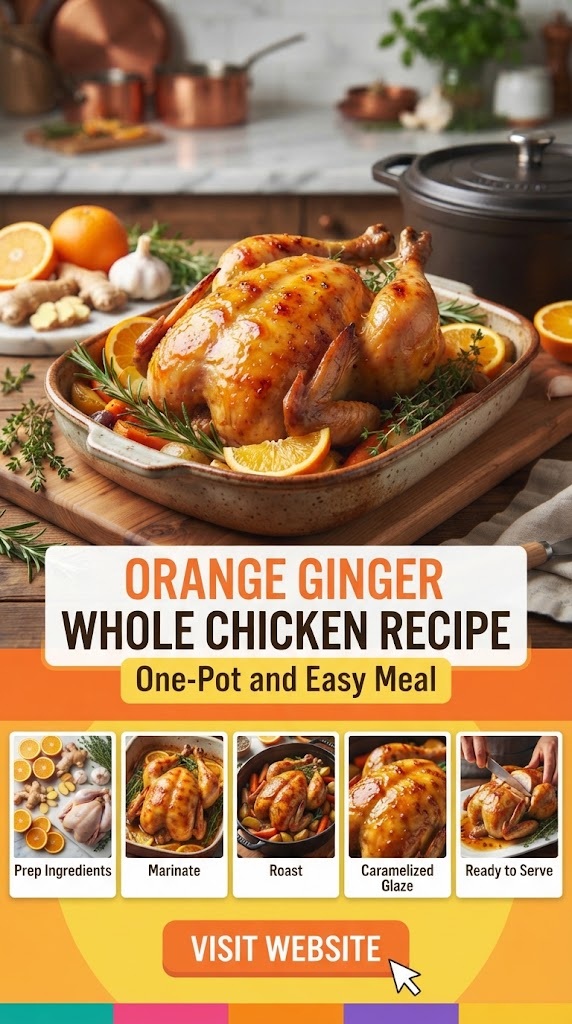
In the realm of home cooking, there is perhaps nothing more comforting, impressive, and versatile than a perfectly roasted whole chicken. However, the standard salt-and-pepper roast can sometimes feel a bit uninspired. If you are looking to elevate your Sunday dinner or simplify your weeknight meal prep without sacrificing an ounce of flavor, the Orange Ginger Whole Chicken is your new culinary best friend.
This recipe isn’t just about food; it’s about a sensory experience. Imagine the bright, citrusy notes of fresh oranges mingling with the sharp, warming zing of ginger, all infused into succulent, juicy chicken with skin so crispy it crackles at the touch of a knife. The best part? It’s all done in one pot. Minimal cleanup, maximum impact.
Why This One-Pot Orange Ginger Chicken Works
When we talk about “one-pot” meals, we often think of stews or pasta. But roasting a whole chicken in a heavy-bottomed vessel—like a Dutch oven or a large cast-iron skillet—is the ultimate one-pot hack. The high walls of the pot help circulate the aromatic steam from the orange juice and ginger, acting as a self-basting oven within an oven. This ensures the breast meat stays moist while the dry heat of the oven crisps the exterior.
The flavor profile is a sophisticated balance of:
- Acidity: From the fresh orange juice, which helps tenderize the protein fibers.
- Heat: From the fresh ginger, providing a deep, resonant warmth that isn’t “spicy” in the chili sense but is incredibly vibrant.
- Sweetness: Natural sugars in the orange zest caramelize on the skin, creating a beautiful golden-brown hue.
- Aromatics: Garlic and onions serve as the flavor foundation, rounding out the profile.
The Essential Ingredients: Quality Matters
To achieve a restaurant-quality Orange Ginger Whole Chicken, the quality of your ingredients is paramount. Because the list is relatively short, each component has a large role to play.
1. The Chicken
Look for a 4 to 5-pound organic or pasture-raised whole chicken. These birds often have a better fat-to-meat ratio, which leads to a more flavorful result. Ensure the bird is completely thawed and, most importantly, patted dry with paper towels before you begin. Moisture is the enemy of crispy skin.
2. Fresh Oranges
Avoid bottled orange juice. You need the oils from the zest and the fresh acidity of the juice. Navel oranges are great for juice, but Blood oranges can add a stunning color and a slightly more complex, berry-like undertone.
3. Fresh Ginger
This is not the place for ground ginger powder. Fresh ginger root provides a pungent, spicy, and woody aroma that defines the dish. We recommend grating half of it into a paste for the rub and slicing the other half into medallions to sit inside the cavity.
4. The Aromatics: Garlic and Onion
A whole head of garlic, sliced crosswise, and a large yellow onion are essential. They act as a “rack” for the chicken to sit on, preventing the bottom from getting soggy while infusing the drippings with incredible flavor.
5. The Fat: Butter or Avocado Oil
Butter provides that classic French rotisserie flavor, while avocado oil has a higher smoke point for those who want an extra-crispy skin. A blend of both is often the “secret sauce” for the perfect roast.
The Recipe: Step-by-Step Instructions
Prep Time: 20 minutes | Cook Time: 1 hour 15 minutes | Serves: 4-6
Ingredients List
- 1 Whole Chicken (4-5 lbs)
- 3 Large Oranges (2 for juicing/zesting, 1 for slicing)
- A 3-inch piece of Fresh Ginger (peeled)
- 1 head of Garlic (cut in half horizontally)
- 1 large Yellow Onion (peeled and quartered)
- 4 tbsp Unsalted Butter (softened) or Olive Oil
- 2 tbsp Soy Sauce (or Coconut Aminos for Paleo/GF)
- 1 tbsp Honey or Maple Syrup
- 2 tsp Sea Salt
- 1 tsp Cracked Black Pepper
- Fresh Rosemary or Thyme sprigs (optional)
Step 1: Prepare the Bird
Remove the chicken from the refrigerator at least 30 minutes before cooking to bring it to room temperature. This ensures even cooking. Remove any giblets from the cavity. Use paper towels to pat the chicken extremely dry, including the inside of the cavity and under the wings.
Step 2: Create the Orange-Ginger Rub
In a small bowl, combine the softened butter (or oil), the zest of two oranges, 1 tablespoon of finely grated ginger, salt, pepper, and the honey. Mix until it forms a thick, aromatic paste. This paste is what will create the crust and infuse the meat with flavor.
Step 3: Season and Stuff
Generously rub the paste all over the chicken. For the best results, gently loosen the skin over the breast meat with your fingers and slide some of the rub directly onto the meat.
Inside the cavity, place:
- The halved garlic head.
- The remaining ginger (sliced into rounds).
- Half of an orange, cut into wedges.
- A few sprigs of fresh herbs.
Step 4: Arrange the Pot
In your Dutch oven or heavy oven-safe skillet, place the quartered onions and the remaining orange slices at the bottom. This creates a natural roasting rack. Place the chicken on top of the onions and oranges, breast-side up. Pour the fresh orange juice and soy sauce into the bottom of the pot (try not to pour it over the skin to keep the rub intact).
Step 5: Roasting to Perfection
Preheat your oven to 425°F (218°C). Starting at a high temperature helps sear the skin.
- Place the pot in the oven (uncovered) and roast for 15 minutes.
- Reduce the oven temperature to 375°F (190°C).
- Continue to roast for another 50–60 minutes.
- The Gold Standard: Use a meat thermometer. The chicken is done when the thickest part of the thigh reaches 165°F (74°C).
Step 6: The Resting Period
Once the chicken is done, remove it from the pot and place it on a carving board. Do not skip the rest. Let the chicken sit for at least 15–20 minutes. This allows the juices to redistribute throughout the meat. If you cut it too soon, all that delicious moisture will run out, leaving you with dry chicken.
Pro-Tips for the Best Roast Chicken
Achieving the “Glass-Like” Crispy Skin
If you want skin that literally snaps, try the “Dry Brine” method. Season the chicken with salt 24 hours in advance and leave it uncovered in the fridge. This dehydrates the skin, making it incredibly thin and crispy when it hits the heat.
The Power of Trussing
While not strictly necessary for a one-pot meal, tying the legs together with kitchen twine (trussing) helps the chicken cook more evenly. It keeps the cavity closed so the aromatics can steam the meat from the inside out effectively.
Deglazing the Pot
After you remove the chicken and the onions, you are left with “liquid gold” at the bottom of the pot. Place the pot on the stovetop over medium heat. Add a splash of white wine or chicken stock and scrape up the browned bits (fond). Simmer until reduced by half. This becomes a concentrated Orange-Ginger jus that you can pour over the carved meat.
Health Benefits of Orange and Ginger
This dish isn’t just delicious; it’s a nutritional powerhouse.
- Vitamin C: Oranges provide a significant boost to the immune system. When roasted, the vitamin C content remains high, and the bioflavonoids in the zest aid in absorption.
- Anti-Inflammatory Properties: Ginger contains gingerol, a substance with powerful anti-inflammatory and antioxidant properties. It’s excellent for digestion and can help reduce muscle pain.
- Lean Protein: Chicken is an excellent source of high-quality protein, essential for muscle repair and metabolic health. By roasting it ourselves, we avoid the hidden sugars and excessive sodium found in store-bought rotisserie chickens.
Customizing Your One-Pot Meal
One of the reasons the Orange Ginger Whole Chicken is a staple in many households is its adaptability. Here are a few ways to switch it up:
The Spicy Kick
Add a tablespoon of Sambal Oelek or Sriracha to your orange-ginger rub. The heat from the chili peppers complements the sweetness of the orange perfectly, creating a “Fire and Ice” flavor profile.
The Root Vegetable Bed
If you want a true “complete meal” in one pot, surround the chicken with chopped carrots, parsnips, and sweet potatoes. These vegetables will roast in the chicken fat and orange juice, turning into caramelized gems of flavor.
The Asian-Fusion Twist
Add a splash of toasted sesame oil and a tablespoon of hoisin sauce to the marinade. Top the finished dish with toasted sesame seeds and sliced green onions for a meal that rivals any high-end Peking duck experience.
Pairing Suggestions: What to Serve with Orange Ginger Chicken
Because this dish has such a bold personality, your sides should either complement or balance the zestiness.
- Coconut Lime Rice: The creaminess of coconut milk and the tang of lime pair beautifully with the orange and ginger.
- Roasted Asparagus or Broccolini: A simple green vegetable roasted with garlic and lemon provides a fresh contrast to the rich chicken.
- Quinoa Salad: A cold quinoa salad with pomegranate seeds, parsley, and a light vinaigrette keeps the meal light and vibrant.
- Garlic Mashed Potatoes: For a more traditional “Sunday Roast” feel, fluffy mashed potatoes are the perfect vessel for the orange-ginger jus.
Meal Prepping and Utilizing Leftovers
A 5-pound chicken usually provides more than one meal for a small family. The leftovers from an Orange Ginger Chicken are incredibly versatile.
- Orange Ginger Chicken Tacos: Shred the leftover cold chicken. Toss it with a bit of lime juice and serve in corn tortillas with a cabbage slaw.
- The Ultimate Salad Topper: Cold, sliced orange-ginger chicken on a bed of mixed greens with almond slivers and a sesame dressing is a gourmet lunch.
- Congee or Chicken Soup: Don’t throw away the carcass! Boil the bones with some extra ginger, garlic, and scallions to make a rich, healing bone broth that serves as the base for an Asian-style chicken soup or congee.
Common Mistakes to Avoid
- Crowding the Pot: If you add too many vegetables around the chicken, you might end up steaming the bird instead of roasting it. Ensure there is some airflow around the sides of the chicken.
- Using Cold Chicken: Taking a bird straight from the fridge to the oven can lead to uneven cooking—the outside will be done while the inside is still raw.
- Not Calibrating the Oven: Many ovens run hot or cold. Always rely on a meat thermometer rather than the clock.
- Over-Zesting: When zesting the orange, make sure only to get the bright orange part. The white part underneath (the pith) is bitter and can ruin the flavor of the rub.
Frequently Asked Questions (FAQ)
Can I make this in a slow cooker?
Yes! While you won’t get the crispy skin, you can place the chicken and aromatics in a slow cooker. Cook on Low for 6-8 hours or High for 3-4 hours. You can pop it under the broiler for 5 minutes at the end to brown the skin.
What if I don’t have a Dutch oven?
A large cast-iron skillet or even a standard roasting pan will work. The key is using something heavy that retains heat well.
Can I use frozen ginger?
Absolutely. In fact, ginger is easier to grate when frozen. Just peel it before freezing, and you can grate it directly into your rub mixture.
Is this recipe Paleo and Whole30 compliant?
Yes, as long as you use coconut aminos instead of soy sauce and omit the honey (or use a tiny bit of date paste). It is naturally gluten-free and packed with whole-food ingredients.
The Cultural Significance of Orange and Ginger
The combination of citrus and ginger has roots in many culinary traditions, particularly in East Asian and Mediterranean cuisines. In Chinese culture, oranges are symbols of luck and prosperity, often featured in New Year celebrations. Ginger has been used for millennia as both a spice and a medicine.
Bringing these ingredients together in a Western-style roast chicken represents a beautiful fusion of flavors. It’s a dish that feels modern yet grounded in ancient flavor wisdom. It’s the kind of meal that brings people to the table, encourages conversation, and leaves everyone feeling nourished and satisfied.
Conclusion: Your New Signature Dish
The One-Pot Orange Ginger Whole Chicken is more than just a recipe; it’s a technique that simplifies your life while elevating your palate. It proves that you don’t need a hundred ingredients or a sink full of dirty dishes to create something spectacular.
By focusing on the harmony between the bright orange, the pungent ginger, and the savory chicken, you create a meal that is equally suited for a quiet Tuesday night or a festive holiday gathering. So, the next time you find yourself at the grocery store looking at a whole chicken, grab some oranges and a knob of ginger. Your kitchen is about to smell incredible, and your dinner guests are in for a treat they won’t soon forget.
Mastering the art of the one-pot roast is a rite of passage for any home cook. With the citrusy twist of this recipe, you aren’t just roasting a chicken—you’re crafting a masterpiece. Enjoy the process, savor the aromas, and most importantly, enjoy every juicy, zesty bite.
Summary Checklist for Success:
- Dry the skin thoroughly for maximum crunch.
- Zest and juice fresh oranges; ignore the bottled stuff.
- Grate fresh ginger for that unmistakable zing.
- Use a meat thermometer to hit that perfect 165°F.
- Rest the meat for 20 minutes to lock in the juices.
With these steps, you are well on your way to claiming the title of the best roast chicken maker in your circle!