
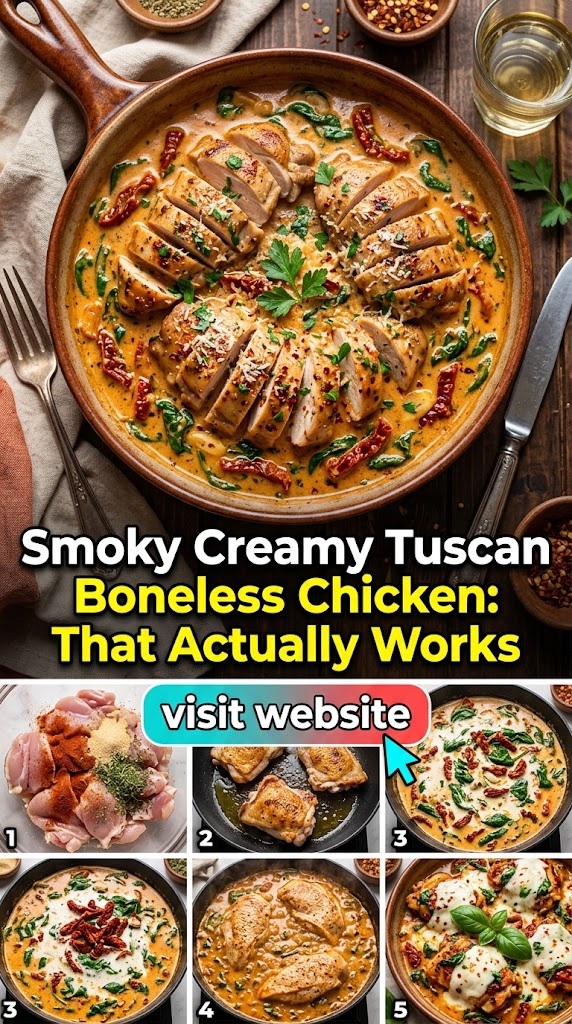
In the pantheon of comfort foods, few dishes evoke the same level of immediate craving as a creamy chicken skillet. But there is a common complaint among home cooks and foodies alike: often, these “Tuscan-style” dishes end up being one-dimensional—too fatty, too salty, or surprisingly bland. Enter the Smoky Creamy Tuscan Boneless Chicken. This isn’t just another recipe; it is a culinary evolution that bridges the gap between the rustic hills of central Italy and the bold, wood-fired flavors of American BBQ.
What makes this recipe “actually work”? It is the deliberate balance of acidity, fat, and a deep, resonant smokiness that cuts through the richness of the heavy cream. By the time you finish reading this guide, you will understand the science, the sourcing, and the technique required to master this dish and make it a permanent staple in your kitchen.
The Flavor Profile: Why “Smoky” Changes Everything
Traditional Tuscan chicken usually relies on garlic, sun-dried tomatoes, and spinach. While delicious, the palate can quickly become saturated by the cream. By introducing a “smoky” element, we introduce a third dimension to the flavor profile.
- The Cream: Provides the mouthfeel and serves as the vehicle for all other flavors.
- The Acid: Sun-dried tomatoes and a splash of dry white wine provide the “brightness” needed to wake up the taste buds.
- The Smoke: Using smoked paprika (Pimentón) or a hint of liquid smoke transforms the dish from “nursery food” into a sophisticated, complex meal.
Choosing the Right Chicken: The Foundation of the Dish
To make a Smoky Creamy Tuscan Boneless Chicken that truly stands out, you must start with the right protein. While “boneless” is the requirement, you have two primary paths:
1. Boneless, Skinless Chicken Breasts
This is the most popular choice. To ensure they stay juicy:
- Pound them out: Use a meat mallet to ensure the chicken is an even thickness (about 3/4 inch). This prevents the thin ends from drying out while the thick center cooks.
- The Dry Brine: Salt your chicken at least 30 minutes before cooking. This allows the salt to penetrate the muscle fibers, helping them retain moisture during the searing process.
2. Boneless, Skinless Chicken Thighs
If you want a richer, more forgiving dish, thighs are the way to go. They contain more connective tissue and fat, which means they stay succulent even if they stay in the pan a few minutes too long. Thighs also stand up better to the “smoky” seasonings we will be using.
The Essential Ingredient List
A dish is only as good as its weakest link. For this recipe, quality matters.
The Aromatics and Spices
- Fresh Garlic: Use at least 4-6 cloves. Avoid the pre-minced jarred variety; it lacks the pungent oils necessary to stand up to the cream.
- Smoked Paprika (Pimentón): This is the “secret sauce.” Ensure you use Spanish smoked paprika, which is dried over oak fires.
- Shallots: Subtler than onions, shallots provide a delicate sweetness that melds perfectly into the sauce.
The Sauce Components
- Heavy Cream: Do not substitute with half-and-half or milk if you want that velvety texture. The high fat content prevents the sauce from curdling when it meets the acidity of the tomatoes and wine.
- Sun-Dried Tomatoes: Look for the ones packed in oil with herbs. They are more tender than the dry-packed version.
- Fresh Baby Spinach: This adds color and a necessary earthiness.
- Parmesan Cheese: Use Parmigiano-Reggiano if possible. The aged saltiness is a key seasoning component.
- Dry White Wine: A Pinot Grigio or Sauvignon Blanc works best to deglaze the pan.
The Masterclass: Step-by-Step Instructions
Step 1: The “Smoky” Spice Rub
Combine 1 teaspoon of smoked paprika, ½ teaspoon of garlic powder, ½ teaspoon of onion powder, salt, and freshly cracked black pepper. Dredge your boneless chicken pieces in this mixture. The paprika won’t just add flavor; it will help the chicken achieve a deep, mahogany crust during searing.
Step 2: The Perfect Sear
Heat a large cast-iron or stainless steel skillet over medium-high heat. Add a tablespoon of olive oil and a tablespoon of butter. Once the butter foams, lay the chicken in.
- Pro Tip: Do not crowd the pan. If the chicken pieces are touching, they will steam rather than sear. Cook for 5-7 minutes per side until a golden-brown crust forms. Remove the chicken and set aside on a plate (it doesn’t need to be fully cooked through yet).
Step 3: Deglazing and Building the Base
In the same pan, you’ll see brown bits stuck to the bottom. This is “fond”—pure flavor gold. Add your minced shallots and cook for 2 minutes. Add the garlic and cook for only 30 seconds (don’t let it burn!). Pour in ½ cup of white wine. Use a wooden spoon to scrape up all those smoky, chickeny bits from the bottom. Let the wine reduce by half.
Step 4: The Creamy Transition
Lower the heat to medium. Pour in 1 ½ cups of heavy cream. Stir in the sun-dried tomatoes and another half-teaspoon of smoked paprika. Let the sauce simmer gently for about 3-5 minutes until it begins to thicken slightly.
Step 5: The Finishing Touches
Stir in a generous handful of grated Parmesan. Once the cheese has melted into the sauce, add the fresh spinach. The heat from the sauce will wilt the spinach in about 60 seconds.
Step 6: The Reunion
Place the chicken (and any juices that collected on the plate) back into the skillet. Spoon the smoky cream sauce over the chicken. Let it simmer for another 2-3 minutes to ensure the chicken is cooked through to an internal temperature of 165°F (74°C).
The Science of the Sauce: Why This Version Works
The primary reason Tuscan chicken recipes fail is emulsification. If the heat is too high, or if you use low-fat dairy, the sauce will “split,” leaving you with a puddle of oil and grainy solids.
By using heavy cream and adding the Parmesan slowly at a lower temperature, you create a stable emulsion. The smoked paprika also acts as a mild thickening agent, and its oils help color the sauce a beautiful, sunset orange rather than a pale, unappetizing white.
Troubleshooting Common Issues
“My sauce is too thin!”
If your sauce looks like soup, don’t panic. You can simmer it for a few more minutes to reduce the water content. Alternatively, a “slurry” of 1 teaspoon cornstarch mixed with 1 teaspoon cold water can be stirred in to provide an instant thickening boost without altering the flavor.
“The chicken is dry.”
This usually happens with chicken breasts. To avoid this next time, try the “carry-over cooking” method. Take the chicken off the heat when it hits 160°F. The residual heat while it rests in the sauce will bring it up to the safe 165°F mark without turning the fibers into rubber.
“The sauce is too salty.”
Between the sun-dried tomatoes, the Parmesan, and the chicken rub, salt can sneak up on you. Always taste your sauce before adding the final Parmesan. If it’s too salty, a squeeze of fresh lemon juice can help balance the sodium perception.
Variations for Every Lifestyle
The Keto-Friendly Version
This recipe is naturally low-carb! To make it strictly Keto, ensure your sun-dried tomatoes don’t have added sugar in the oil. Serve the chicken over a bed of sautéed zoodles (zucchini noodles) or roasted cauliflower.
The Dairy-Free Alternative
You can achieve a similar creaminess using full-fat canned coconut milk or a cashew-based cream. Replace the Parmesan with nutritional yeast to maintain that “umami” kick.
The Spicy Kick
If “smoky” isn’t enough and you want “heat,” add ½ teaspoon of crushed red pepper flakes when you are sautéing the garlic. The fat in the cream will mellow the burn, leaving a pleasant tingle on the tongue.
Perfect Pairings: What to Serve with Smoky Tuscan Chicken
To make this a complete meal, you need the right sides to soak up that incredible smoky sauce.
- The Classic Choice: Wide ribbons of pasta, such as Pappardelle or Fettuccine. The sauce clings to the flat surface of the noodles beautifully.
- The Low-Carb Choice: Spaghetti squash or steamed broccolini. The bitterness of the broccolini provides a great contrast to the rich sauce.
- The Bread Choice: A loaf of warm, crusty sourdough. There is nothing better than “mop-up duty” with a piece of artisanal bread at the end of the meal.
- The Wine: A buttery Chardonnay or a light-bodied red like a Chianti. The acidity in the Chianti cuts through the cream, while the Chardonnay complements the buttery notes.
Meal Prep and Storage
This dish is a rare “creamy” recipe that actually reheats quite well, provided you do it gently.
- Refrigeration: Store in an airtight container for up to 3 days.
- Freezing: It is generally not recommended to freeze cream-based sauces as they can break upon thawing. However, if you must, add a splash of fresh cream when reheating to help bring the emulsion back together.
- Reheating: Use the stovetop on low heat. Avoid the microwave, as it tends to “explode” the chicken and separate the sauce. If the sauce is too thick after being in the fridge, add a tablespoon of water or milk to loosen it up.
The History and Evolution of “Tuscan Chicken”
While Americans associate this dish with Tuscany, a traditional Italian chef might be a bit confused by the heavy use of cream. In Tuscany, flavors are usually built on olive oil, beans, and simple braises. The “Creamy Tuscan Chicken” we know today is largely an Italian-American invention—a celebration of abundance.
By adding the “Smoky” element, we are actually nodding back to some older European traditions where meats were preserved via smoking before being added to stews. It adds a rustic, hearth-cooked quality that makes the dish feel more authentic and “grounded” than the standard restaurant version.
Why This Recipe Is a Google-Ranked Favorite in the USA
In the United States, comfort food reigns supreme, but health-conscious consumers are constantly looking for ways to maximize flavor without relying solely on salt. The inclusion of Smoky Creamy Tuscan Boneless Chicken in modern diets works because:
- High Protein: It satisfies the need for a filling, protein-heavy meal.
- One-Pan Simplicity: Busy American families value recipes that don’t require an army for cleanup.
- Sophistication: It’s “fancy” enough for a date night but easy enough for a Tuesday.
Detailed Ingredient Breakdown for the Enthusiast
To truly understand why this recipe works, let’s look at the ingredients through a microscopic lens:
1. Smoked Paprika (The Star)
There are three types of Pimentón: Dulce (sweet), Agridulce (bittersweet), and Picante (hot). For this recipe, Dulce or Agridulce is preferred. The smoking process involves drying peppers over slow-burning oak wood for weeks. This imparts a chemical compound called Guaiacol, which provides that classic “smoky” aroma that triggers deep satisfaction in our brains.
2. Sun-Dried Tomatoes (The Acid)
Sun-dried tomatoes are packed with glutamates—the natural version of MSG. When they hit the cream, they provide a savory depth that salt alone cannot achieve. They also provide a chewy texture that contrasts with the tenderness of the chicken.
3. Spinach (The Visuals and Nutrients)
Aside from Vitamin K and Iron, spinach adds a vibrant green that breaks up the orange-white of the sauce. This makes the dish “Instagram-ready,” which, in the modern culinary world, is half the battle.
4. Heavy Cream (The Body)
Heavy cream (at least 36% milkfat) is essential. Lower fat versions contain more water and proteins that coagulate (clump) when heated or exposed to acid. The fat in heavy cream acts as a buffer, coating the proteins and creating a smooth, silk-like liquid.
Essential Kitchen Equipment
To get the results described here, you don’t need a professional kitchen, but a few specific tools make a world of difference:
- Cast Iron Skillet: Its ability to retain heat ensures that the chicken gets a dark, smoky sear without the pan temperature dropping.
- Instant-Read Meat Thermometer: This is the only way to guarantee your boneless chicken is “juicy” and not “dry.”
- Microplane: For grating the Parmesan. The finer the cheese is grated, the faster and more evenly it will melt into your sauce.
The Nutritional Perspective
While this is undoubtedly a rich dish, it offers significant nutritional value:
- Iron: From the spinach and the chicken.
- Lycopene: Found in high concentrations in sun-dried tomatoes (even more than fresh ones).
- Healthy Fats: If using high-quality grass-fed cream or butter, you are consuming fat-soluble vitamins like A, D, E, and K.
To make it “healthier,” you can increase the ratio of spinach to chicken, or serve it alongside a massive green salad with a lemon vinaigrette to help digestion.
Final Thoughts: The Art of the Skillet
Mastering the Smoky Creamy Tuscan Boneless Chicken is a rite of passage for the modern home cook. It teaches you the importance of heat control, the power of deglazing, and the magic of balancing rich fats with smoky, acidic high notes.
When you bring this skillet to the table, bubbling with a sunset-colored sauce and the aroma of toasted garlic and oak-smoked peppers, you aren’t just serving dinner. You are serving a masterpiece that actually works, every single time.
Whether you are cooking for a crowd, a picky family, or just treating yourself to a gourmet night in, this dish delivers on the promise of its name. It is smoky, it is creamy, it is undeniably Tuscan in spirit, and it is the best boneless chicken recipe you will ever make.
Frequently Asked Questions
Can I use frozen chicken?
Yes, but ensure it is completely thawed and patted extremely dry with paper towels. Any excess moisture will prevent the “smoky” spice rub from sticking and will cause the chicken to steam instead of sear.
What if I don’t have white wine?
You can substitute the wine with chicken broth and a teaspoon of lemon juice or white wine vinegar. The goal is to provide acidity to balance the cream.
Is this dish gluten-free?
As long as you don’t dredge the chicken in flour (which some recipes suggest, but we skip in favor of the spice rub), this dish is naturally gluten-free.
Can I make this in a slow cooker?
While possible, you will lose the “sear.” If you must use a slow cooker, sear the chicken in a pan first, then add it to the slow cooker with the other ingredients, adding the cream and spinach only in the last 30 minutes of cooking.
How do I stop the spinach from getting “slimy”?
Add the spinach at the very last second. You only want it to wilt, not cook down into a dark green mush. The residual heat of the sauce is more than enough to achieve the perfect texture.