
Dog Hydration: Is Your Furry Friend Secretly Thirsty?
Water is the essence of life, but for our canine companions, it is much more than just a thirst-quencher. It is the engine that drives every biological process in their bodies. From regulating body temperature to cushioning joints and facilitating digestion, water is the “forgotten nutrient” that can make the difference between a sluggish pup and a thriving one.
As a dog owner, you might think keeping your pet hydrated is as simple as putting a bowl of water on the floor. However, hydration is a complex science influenced by diet, activity level, breed, and environment. In this comprehensive guide, we will dive deep into the world of canine hydration, uncovering the hidden signs of dehydration, creative ways to encourage drinking, and the life-saving tips every “pawrent” needs to know.
Why Hydration is the Pillar of Canine Health
A dog’s body is composed of approximately 60% to 70% water. Unlike humans, dogs don’t have sweat glands all over their bodies; they primarily dissipate heat through panting. This process relies heavily on moisture in the respiratory tract. When a dog is dehydrated, they lose the ability to cool themselves effectively, leading to a dangerous spiral of overheating and organ stress.
The Biological Roles of Water in Dogs:
- Temperature Regulation: Through panting and vasodilation.
- Digestion and Nutrient Absorption: Water breaks down food and moves nutrients across intestinal membranes.
- Joint Lubrication: Synovial fluid, which cushions joints, is largely water-based.
- Waste Removal: The kidneys and liver require water to flush toxins from the bloodstream.
- Cognitive Function: Dehydration can lead to lethargy, confusion, and irritability.
How Much Water Does Your Dog Actually Need?
One of the most common questions veterinarians hear is: “How much water should my dog drink daily?” While there isn’t a “one size fits all” answer, there is a golden rule of thumb.
The Standard Formula
Most healthy dogs require 0.5 to 1 ounce of water per pound of body weight per day.
- 10 lb Dog: 5 to 10 ounces (about 1 cup).
- 50 lb Dog: 25 to 50 ounces (about 3 to 6 cups).
- 100 lb Dog: 50 to 100 ounces (nearly a gallon).
Factors That Change the Requirement
- Diet: Dogs on a dry kibble diet (which is only about 10% water) need significantly more drinking water than dogs on a wet food or raw diet (which can be up to 75% water).
- Activity Level: A high-energy Border Collie herding sheep will need double the water of a sedentary Bulldog.
- Weather: Humidity and high temperatures increase water loss through panting.
- Age: Puppies need more frequent, smaller amounts of water, while seniors may need more to support aging kidneys.
The Hidden Signs of Dehydration: What to Look For
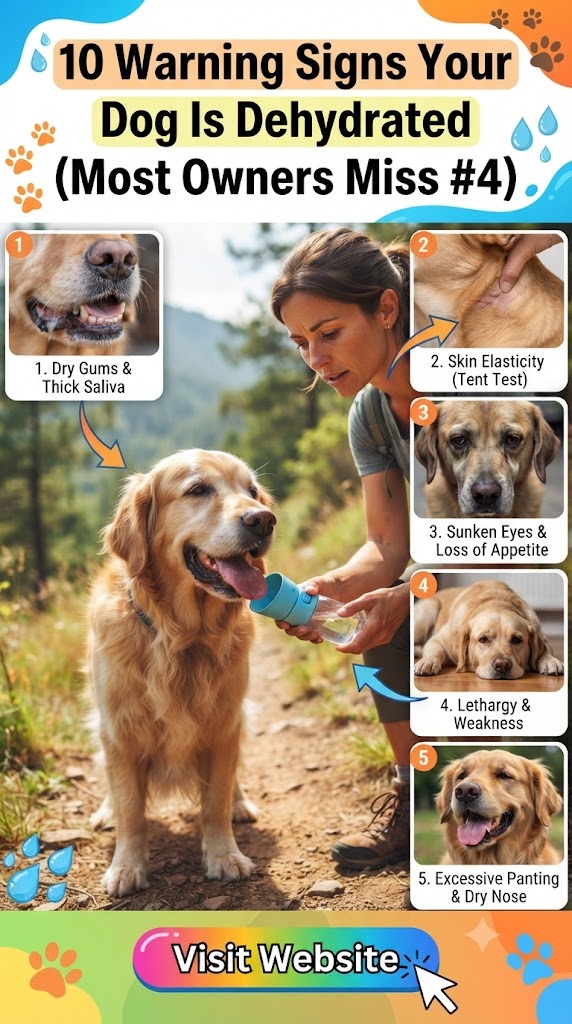
By the time a dog looks visibly thirsty, they may already be mildly dehydrated. As a proactive owner, you need to recognize the subtle clinical signs before they become a medical emergency.
1. The Skin Tenting Test
This is the most reliable way to check hydration at home. Gently grasp a fold of skin at the back of your dog’s neck or between their shoulder blades, pull it up, and release it.
- Hydrated: The skin snaps back into place instantly.
- Dehydrated: The skin stays in a “tent” shape or returns slowly.
2. Sticky or Dry Gums
Lift your dog’s lip and feel their gums. They should be slick, wet, and slimy. If they feel tacky, sticky, or bone-dry, your dog needs fluids immediately.
3. Capillary Refill Time
Press your finger firmly against your dog’s gum until it turns white. Remove your finger. The color should return to pink in less than two seconds. If it takes longer, it’s a sign of poor circulation often caused by dehydration.
4. Sunken Eyes
In severe cases, the fluid pads behind the eyes dry up, causing the eyes to look dull or recessed into the skull. This is a veterinary emergency.
5. Lethargy and Loss of Appetite
A dehydrated dog often refuses to eat because they lack the saliva necessary to chew and swallow, and their energy levels will plummet.
7 Creative Tips to Encourage Your Dog to Drink More Water
Some dogs are “camel-like”—they simply don’t seem interested in their water bowl. If you’re struggling to get your pup to hydrate, try these “viral” hacks that professional trainers and vets use.
1. The “Flavor Splash”
Plain water can be boring. Add a splash of low-sodium chicken or beef broth (ensure it contains no onions or garlic) to the bowl. Alternatively, use tuna juice (canned in water, not oil) to create an irresistible “fish water” treat.
2. Invest in a Pet Fountain
Many dogs are instinctually drawn to running water. In the wild, standing water is more likely to contain bacteria, whereas running water is perceived as fresh. A circulating pet fountain filters the water and keeps it moving, which can trigger a dog’s drinking reflex.
3. The Bowl Rotation Strategy
Believe it or not, the material of the bowl matters.
- Plastic bowls can develop tiny scratches that harbor bacteria and change the taste of the water.
- Stainless steel or Ceramic are the best options as they remain neutral and are easy to sanitize. Try placing multiple bowls in different rooms so water is always within reach.
4. “Pupsicles” and Ice Cubes
On a hot day, drop a few ice cubes into the water bowl. Many dogs find the clinking sound and the “bobbing” cubes a fun game. You can also freeze treats, berries, or broth into large ice blocks for them to lick.
5. “Soup-ify” Their Meals
If your dog is a kibble fanatic, add warm water or broth directly to their food. Let it sit for a few minutes to create a gravy. This ensures they are getting a significant amount of hydration during mealtime.
6. The Fruit Hydration Hack
Some fruits are “water bombs” for dogs. Offer small pieces of:
- Watermelon (seedless and no rind)
- Cucumber
- Cantaloupe
- Blueberries These snacks are low in calories but high in moisture.
7. Cleanliness is Godliness
Dogs have a sense of smell 10,000 to 100,000 times stronger than ours. If there is a slight slime film (biofilm) in their bowl, they will smell it and may refuse to drink. Wash water bowls daily with soap and hot water.
Seasonal Hydration: Summer vs. Winter
Hydration isn’t just a summer concern. While the heat of July presents obvious risks, winter brings its own set of challenges.
Summer Safety: The “Sun’s Out, Tongues Out” Rule
During summer, a dog’s primary cooling mechanism is evaporation.
- Avoid Peak Heat: Exercise your dog in the early morning or late evening.
- The 5-Second Rule: If the pavement is too hot for your hand, it’s too hot for their paws and will dehydrate them faster.
- Shade is Mandatory: Always ensure your dog has a cool, shaded place to rest near their water source.
Winter Hazards: The Dry Air Dilemma
In winter, indoor heating systems create very dry air, which can dehydrate a dog’s respiratory tract.
- Snow is Not Water: Do not rely on your dog eating snow for hydration. It takes more energy (and body heat) to melt the snow than the hydration provides.
- Freshness Check: Outdoor bowls can freeze. Ensure you use heated bowls if your dog spends time outside in sub-zero temperatures.
On the Go: Travel Hydration Tips
Whether you’re hiking a mountain or driving to the grocery store, water should always be on your packing list.
- Collapsible Bowls: These are lightweight and can clip onto your leash or backpack.
- The “Squirt” Method: Some dogs aren’t comfortable drinking from a bowl in a moving car. A squirt bottle can help you directed water into their mouth more easily.
- Pre-Hydrate: Give your dog a small bowl of water 30 minutes before a car ride to help prevent motion sickness, which can be exacerbated by dehydration.
- Familiar Water: Some sensitive dogs won’t drink “strange” water from a park or a different city because it smells different. Bring a gallon of water from home to ensure they stay consistent.
Water Intoxication: The Rare but Dangerous Opposite
While we focus heavily on dehydration, it is possible for a dog to drink too much water. This is known as Hyponatremia (water intoxication).
This most often happens when dogs:
- Obsessively bite at water from a pressurized hose.
- Lap up excessive amounts of water while swimming in a pool or lake.
- Engage in “water fetching” for long periods.
Symptoms of Water Intoxication:
- Loss of coordination (staggering)
- Nausea/Vomiting
- Bloating
- Dilated pupils
- Pale gums
If you suspect water intoxication, seek veterinary help immediately, as it can cause brain swelling.
Water Quality: Is Tap Water Safe?
In most developed countries, tap water is safe for dogs. However, if you wouldn’t drink it, don’t give it to your pet.
- Hard Water: High mineral content in “hard water” has been linked in some studies to an increased risk of urinary crystals and stones in certain breeds.
- Chlorine and Fluoride: While safe in small amounts, some dogs are sensitive to the smell of chlorine. Using a simple charcoal filter pitcher (like a Brita) can make the water much more appealing to your dog.
Special Considerations for Life Stages
Puppies
Puppies are like sponges; they lose water quickly. Because they are so active and their bodies are still developing, they should have access to water at all times during the day. However, to help with potty training, many vets recommend picking up the water bowl 2 hours before bedtime.
Seniors
Senior dogs often suffer from kidney decline or cognitive dysfunction. They may literally “forget” to drink. If your senior dog is reluctant to move toward their bowl due to arthritis, place multiple bowls near their favorite sleeping spots.
Brachycephalic Breeds (Flat-Faced Dogs)
Pugs, French Bulldogs, and English Bulldogs are at a massive disadvantage when it comes to cooling down. Because their airways are compacted, their panting is less efficient. These breeds require meticulous hydration monitoring and should never be left in the heat without ample water.
The Hydration Checklist: Daily Habits for Success
To wrap up, here is a daily checklist to ensure your dog is never running on empty:
- Morning: Rinse and refill the water bowl with fresh, cool water.
- Mid-Day: Check the water level; if it’s more than half empty, your dog is doing great! If it’s untouched, try a “flavor splash.”
- Evening: Wash the bowl with soap to prevent “biofilm” buildup.
- Weekly: Perform the “Skin Tenting” test to check your dog’s baseline hydration levels.
- Always: Bring water on any walk longer than 15 minutes.
Conclusion
Hydration is more than just a biological necessity; it is a vital component of your dog’s comfort and longevity. By understanding the “why” and “how” of canine water intake, you are empowered to protect your best friend from the silent dangers of dehydration.
Remember, a hydrated dog is a happy, energetic, and healthy dog. So, go ahead—go refresh that water bowl right now. Your dog will thank you with a wagging tail and a healthy, wet nose!