
Recognizing and Preventing Dehydration in Dogs
Water is the essence of life, and for our canine companions, it is the fuel that keeps every single biological engine running. From regulating body temperature to cushioning joints and facilitating digestion, water is the most critical nutrient in a dog’s diet. Yet, dehydration remains one of the most common—and most overlooked—emergencies in the veterinary world.
Dehydration isn’t just about being “thirsty.” It is a complex physiological state where the body loses more fluid than it takes in, leading to a dangerous imbalance of electrolytes like sodium, chloride, and potassium. Left unchecked, this imbalance can lead to organ failure, heatstroke, and even death.
In this comprehensive guide, we will dive deep into the red flags, the subtle “hidden” symptoms, the DIY tests you can perform at home, and the life-saving steps you need to take to keep your furry friend hydrated and healthy.
The Biology of Thirst: Why Dogs Are Different
Unlike humans, who have sweat glands all over their bodies to help them cool down, dogs have a much more limited cooling system. They primarily regulate their temperature through panting and a small number of sweat glands in their paw pads.
When a dog pants, moisture evaporates from their tongue and the lining of their lungs, which helps lower their body temperature. However, this process uses up a significant amount of the body’s water reserves. If that water isn’t replaced, the blood volume drops, making it harder for the heart to pump oxygen to the vital organs. This is why dehydration in dogs can escalate into a crisis far faster than it does in humans.
15 Critical Signs of Dehydration You Need to Know
Recognizing dehydration early can be the difference between a quick recovery and a long, expensive stay at the animal hospital. Here are the symptoms, ranging from the obvious to the dangerously subtle.
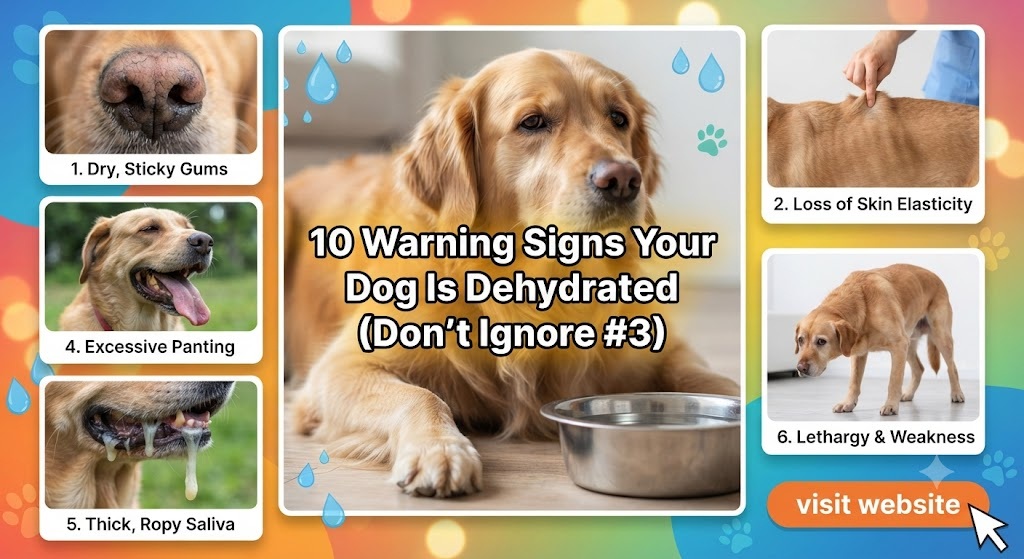
1. Loss of Skin Elasticity (The “Skin Turgor” Test)
The most classic sign of dehydration is a loss of skin elasticity. In a hydrated dog, the skin is supple and snaps back into place immediately when pulled. In a dehydrated dog, the skin lacks the moisture needed to remain “bouncy.”
2. Xerostomia (Dry, Sticky Gums)
A healthy dog’s mouth should be wet and slippery. If you touch your dog’s gums and they feel tacky, sticky, or bone-dry, your dog is likely in the moderate stages of dehydration. This is often one of the first signs owners notice.
3. Thick, Ropey Saliva
When the body is trying to conserve water, it stops producing thin, watery saliva. If your dog is drooling but the saliva looks thick, stringy, or “ropey,” their body is desperately signaling a fluid deficit.
4. Sunken Eyes (Enophthalmos)
As dehydration progresses, the fluid pads behind the eyeballs begin to shrink. This causes the eyes to look “sunken” into the skull. If your dog looks weary or their eyes lack their usual “pop,” they are likely severely dehydrated.
5. Excessive, Heavy Panting
While all dogs pant, dehydrated dogs often pant more aggressively. This is a catch-22: they pant to cool down, but the act of panting further dehydrates them. If the panting is accompanied by a wide, frantic-looking mouth, pay close attention.
6. Lethargy and Extreme Fatigue
Is your usually energetic pup suddenly unwilling to chase a ball? Dehydration causes a drop in blood pressure and a decrease in oxygen flow to the brain and muscles, leading to profound weakness and a lack of interest in physical activity.
7. Loss of Appetite
A dehydrated dog often loses interest in food. The body requires water to produce the enzymes and acids necessary for digestion; without it, the idea of eating becomes unappealing or even painful.
8. Dry, Cracked Nose
While a dry nose isn’t always a sign of illness, a chronically dry or crusty nose in a dog that is usually “wet-nosed” can indicate a systemic lack of moisture.
9. Vomiting and Diarrhea
Ironically, the very things that cause dehydration are also signs of it. If a dog is already dehydrated, their gastrointestinal tract may begin to malfunction, leading to a vicious cycle of further fluid loss.
10. Dark, Concentrated Urine
If your dog’s urine looks like apple juice or has a very strong odor, their kidneys are working overtime to conserve water. Healthy dog urine should be a pale yellow.
11. Slow Capillary Refill Time
If you press your finger against your dog’s gums, the area will turn white. In a healthy dog, it should return to pink in less than two seconds. If it takes longer, it indicates poor circulation due to low blood volume.
12. Weak Pulse
In severe cases, the heart has less blood to pump. If you know how to check your dog’s femoral pulse (inside the thigh) and it feels “thready” or weak, this is a medical emergency.
13. Cold Paws
When the body enters “survival mode” due to dehydration, it shunts blood away from the extremities (the paws and tail) to protect the internal organs (the heart and brain). Cold paws on a warm day are a major red flag.
14. Dizziness or Loss of Balance
Dehydration affects the neurological system. If your dog is stumbling, acting “drunk,” or seems disoriented, their brain is likely suffering from a lack of proper hydration and electrolyte balance.
15. Muscle Tremors
Electrolytes like magnesium and potassium are essential for muscle function. When these are depleted, you may notice small twitches or full-blown muscle tremors in your dog’s legs or body.
The DIY “At-Home” Dehydration Checks
If you suspect your dog might be dehydrated, perform these three tests immediately.
The Skin Pinch Test (The Turgor Test)
- Gently grasp a fold of skin on the back of your dog’s neck or between their shoulder blades.
- Pull it up slightly and then let go.
- The Result: If the skin snaps back instantly, they are likely okay. If the skin stays in a “tent” shape or moves back slowly, they are dehydrated.
The Gum Touch Test
- Lift your dog’s lip.
- Run your finger across the gums.
- The Result: If they feel slick and wet (like the inside of your own cheek), that’s good. If they feel like they’re covered in Saran wrap or are sticky to the touch, they need water.
The Capillary Refill Test
- Press your thumb firmly against the gum above the canine tooth until the spot turns white.
- Lift your thumb.
- The Result: The spot should turn pink again in 1–1.5 seconds. If it takes 3 seconds or more, seek veterinary help.
Why Is My Dog Dehydrated? Common Causes
Dehydration isn’t always just about a dog forgetting to drink. Often, there is an underlying cause that is leaching moisture from their system.
- Heatstroke: The most common cause in summer. High ambient temperatures cause the dog to pant excessively until they can no longer keep up.
- Illness and Fever: Just like humans, a fever increases the body’s metabolic rate and water usage.
- Persistent Vomiting/Diarrhea: These conditions dump fluids and electrolytes out of the body at an unsustainable rate.
- Diabetes: One of the hallmark signs of canine diabetes is frequent urination, which leads to chronic dehydration.
- Kidney Disease: If the kidneys cannot concentrate urine, the dog will lose massive amounts of water every time they pee.
- Lack of Access: Sometimes the bowl is empty, the water is dirty, or the dog is outside and cannot reach their water source.
Breed-Specific Risks: Who Is Most Vulnerable?
Not all dogs handle heat and hydration the same way. Certain “high-risk” categories require extra vigilance:
Brachycephalic Breeds (Flat-Faced Dogs)
Pugs, Bulldogs, Boxers, and Frenchies have compromised airways. Because they cannot pant as efficiently as long-nosed dogs, they overheat and dehydrate much faster. For these breeds, even a 15-minute walk in 80-degree weather can be dangerous.
Senior Dogs
Older dogs often have underlying conditions like kidney issues or cognitive dysfunction (dementia) that might make them “forget” to drink or make their bodies less efficient at processing water.
Puppies
Puppies have a much higher body-water percentage than adults and can become dangerously dehydrated in just a few hours if they have a bout of diarrhea or vomiting.
Working and Athletic Dogs
Hunting dogs, agility competitors, and hiking companions burn through water at an incredible rate. They require proactive hydration—meaning you offer water before they even look thirsty.
The “Winter Dehydration” Myth
Many owners believe dehydration is only a “summer problem.” This is a dangerous misconception. In the winter:
- Dry Air: Indoor heating systems strip moisture from the air, causing dogs to lose water through respiration.
- Frozen Water: If your dog spends time outside, their water bowl may freeze over, leaving them with no way to drink.
- Snow Consumption: Some dogs try to hydrate by eating snow. However, it takes a massive amount of energy (and body heat) to melt snow into water, which can lead to hypothermia and further dehydration.
What to Do If Your Dog Is Dehydrated
The actions you take depend entirely on the severity of the symptoms.
For Mild Dehydration (Alert, but tacky gums):
- Offer Water in Small Amounts: Do not let them “gulp” a gallon of water at once, as this can lead to vomiting or bloat. Give small sips every few minutes.
- Ice Cubes: Many dogs love crunching on ice, which provides a slow, steady intake of water.
- Wet Food: Switch from dry kibble to wet food temporarily to increase their moisture intake.
For Moderate to Severe Dehydration (Lethargic, sunken eyes, skin tenting):
- Do Not Wait: Severe dehydration cannot be fixed at home. The dog likely needs Subcutaneous (SQ) or Intravenous (IV) fluids.
- Call the Vet: Explain the symptoms (tacky gums, skin tenting) so they know to prioritize your arrival.
- Do Not Force Water: If your dog is semi-conscious or very weak, forcing water down their throat can lead to aspiration pneumonia (water in the lungs).
Hacks to Keep Your Dog Hydrated
If your dog is a “picky drinker,” use these viral-worthy hacks to ensure they stay topped up:
- The “Puppy Gatorade” Hack: Add a splash of low-sodium chicken or beef broth to their water bowl. The scent and flavor will entice them to drink more. (Ensure it contains no onions or garlic!).
- The Water Fountain: Many dogs prefer running water over stagnant water. Investing in a pet fountain can encourage them to drink more frequently.
- The “Wet Kibble” Strategy: Add a cup of water directly into their dry food. Most dogs will eat the “cereal” without realizing they are hydrating.
- Strategic Bowl Placement: Place water bowls in multiple rooms of the house. If water is always within sight, they are more likely to take a sip.
- Frozen Treats: Freeze dog-safe fruits (like blueberries or watermelon) inside large ice blocks. As the dog licks the ice to get the fruit, they hydrate.
Summary: The 3-Step Hydration Checklist
To ensure your dog never reaches a point of crisis, memorize this simple daily checklist:
- Check the Bowl: Is it clean? (Bacteria-filled bowls discourage drinking). Is it full?
- Check the Gums: A quick finger-swipe once a day keeps you familiar with what “healthy” feels like for your dog.
- Check the Output: Is the urine light in color? Is the dog peeing at their usual frequency?
Dehydration is a “silent” condition because dogs cannot tell us when they feel faint or parched. They rely entirely on our ability to spot the signs. By staying vigilant and understanding the biology of your pet, you can ensure that your dog stays happy, hydrated, and ready for every adventure.
Remember: When in doubt, call the vet. It is always better to treat a mild case of dehydration with a quick fluid bolus than to wait until it becomes a life-threatening emergency.