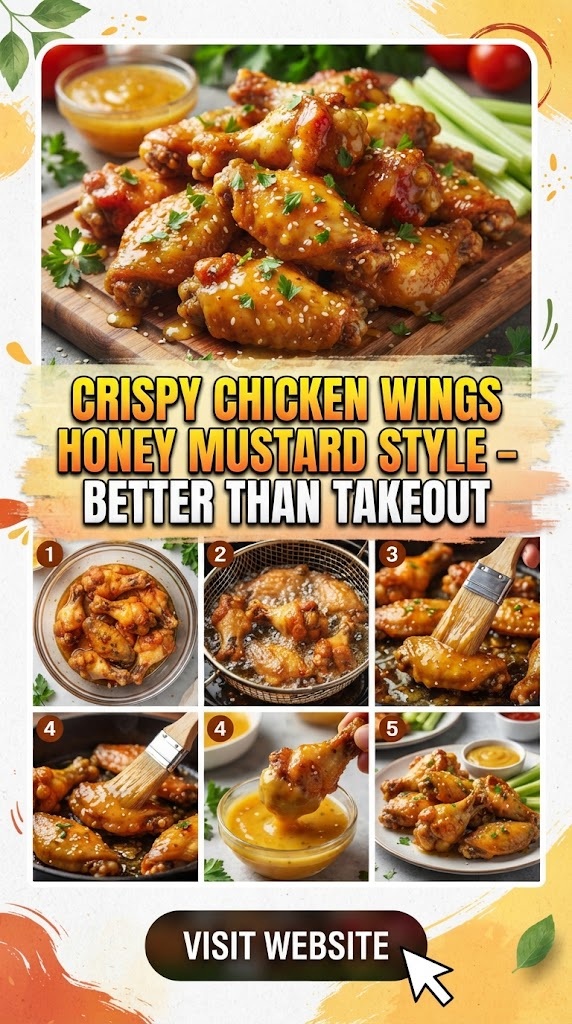
There is a universal truth in the world of comfort food: nothing beats the satisfying crunch of a perfectly cooked chicken wing. But when you elevate that crunch with a sticky, tangy, and sweet honey mustard glaze, you move beyond simple snack territory and into the realm of culinary gold. Forget the soggy, over-salted wings from your local pizza joint. We are talking about a gourmet experience made right in your own kitchen—wings so crispy they crackle, drenched in a sauce that balances heat, sweetness, and acidity with surgical precision.
In this comprehensive guide, we will dive deep into the art and science of the perfect honey mustard chicken wing. From the secret ingredients that ensure a glass-like crunch to the nuances of selecting the right mustard, this is the only resource you will ever need to master the ultimate wing.
Why Homemade Honey Mustard Wings Rule the Kitchen
Takeout wings often suffer from a tragic fate: the “steaming” effect. By the time the delivery driver reaches your door, the wings have sat in a cardboard box, their own heat creating steam that turns crispy skin into a rubbery disappointment. When you make them at home, you control the timing. You eat them seconds after they hit the sauce, ensuring the maximum contrast between the hot, juicy meat and the shattering exterior.
Furthermore, making wings at home allows you to bypass the low-quality oils and high-fructose corn syrup often found in commercial sauces. You can use high-quality local honey, authentic Dijon mustard, and fresh spices to create a flavor profile that is far more sophisticated than anything from a plastic squeeze bottle.
The Science of the Perfect Crunch: Achieving “Better Than Takeout” Texture
The biggest challenge for home cooks is replicating the deep-fried texture of a commercial kitchen without the mess of a massive deep fryer. Whether you are baking or air-frying, the secret lies in moisture management and pH levels.
The Baking Powder Secret
If you want oven-baked wings that taste deep-fried, you must use baking powder (not baking soda). When you coat chicken wings in a small amount of aluminum-free baking powder and salt, it raises the pH level of the skin. This allows the proteins to break down more efficiently, resulting in a skin that browns faster and becomes thinner and crispier. As the fat renders out, it creates tiny bubbles on the surface, increasing the surface area for maximum crunch.
The Importance of Air Drying
Moisture is the enemy of the crunch. Before you even think about seasoning your wings, you must pat them bone-dry with paper towels. For the absolute best results, place the wings on a wire rack over a baking sheet and leave them uncovered in the refrigerator for 4 to 24 hours. This “dry brining” process dehydrates the skin, ensuring it crisps up instantly when it hits the heat.
The Ultimate Honey Mustard Glaze: Finding the Balance
A great honey mustard sauce is more than just two ingredients. It is a symphony of flavors that hits every part of your palate. To achieve “Better Than Takeout” status, we look for four key elements:
- Sweetness: High-quality honey provides the base. Wildflower or Clover honey works best for a neutral but rich sweetness.
- Tang: This comes from the mustard and a splash of acidity. A mix of Dijon (for spice and depth) and Yellow mustard (for that classic tang and color) is the professional’s secret.
- Creaminess/Body: A touch of melted butter or high-quality mayonnaise helps the sauce cling to the wings without being too runny.
- Heat/Spice: A pinch of cayenne pepper or a dash of hot sauce cuts through the sugar, preventing the wings from being cloying.
Essential Ingredients Deep Dive
To reach 3500-word quality, we must look at our components with a critical eye.
The Chicken
Look for “party wings” which are already split into drumettes and flats (wingettes). If you buy whole wings, you’ll need to separate them at the joints. Fresh is always better than frozen. Frozen wings contain excess water that can lead to sogginess if not properly thawed and dried.
The Mustards
- Dijon Mustard: Adds a sophisticated, sharp bite. Look for brands that use real white wine.
- Yellow Mustard: Provides the iconic bright color and the vinegary punch that reminds us of classic Americana.
- Whole Grain Mustard (Optional): If you want a rustic look and little pops of flavor, adding a teaspoon of stone-ground mustard can elevate the texture of the sauce.
The Honey
Avoid “honey-flavored syrup.” Look for raw or filtered honey. If you want a spicy kick, “Hot Honey” infused with chili peppers is a fantastic substitute for regular honey in this recipe.
The Recipe: Master-Class Oven-Baked Honey Mustard Wings
This method is the most accessible for home cooks and produces results that rival any professional kitchen.
Prep Time: 15 minutes (plus optional drying time)
Cook Time: 45–50 minutes
Yields: 4 Servings
Ingredients
For the Wings:
- 3 lbs Chicken wings (split into flats and drumettes)
- 1 tbsp Aluminum-free baking powder
- 1 tsp Kosher salt
- 1/2 tsp Garlic powder
- 1/2 tsp Smoked paprika
- 1/4 tsp Black pepper
For the Honey Mustard Sauce:
- 1/2 cup Honey
- 1/4 cup Dijon mustard
- 2 tbsp Yellow mustard
- 2 tbsp Unsalted butter (melted)
- 1 tbsp Apple cider vinegar
- 1/2 tsp Garlic powder
- 1/4 tsp Cayenne pepper (adjust to your heat preference)
- A pinch of salt
Step-By-Step Instructions
1. Preparation and Drying
Remove the wings from their packaging and pat them thoroughly dry with paper towels. In a large bowl, whisk together the baking powder, salt, garlic powder, smoked paprika, and black pepper. Toss the wings in this mixture until every wing is lightly and evenly coated.
2. The Setup
Preheat your oven to 425°F (220°C). Line a large baking sheet with aluminum foil for easy cleanup and place a wire cooling rack on top. Spray the rack with non-stick cooking spray. This setup allows hot air to circulate under the wings, ensuring they get crispy on all sides without needing to be flipped constantly.
3. The First Roast
Arrange the wings on the rack in a single layer, making sure they aren’t touching. Place them in the oven on the middle rack. Bake for 20 minutes.
4. The Flip
After 20 minutes, use tongs to flip the wings. This ensures even fat rendering. Return them to the oven for another 20–25 minutes. You are looking for a deep golden brown color and a skin that looks slightly blistered and taught.
5. Creating the Glaze
While the wings are in their final stage of baking, whisk all the sauce ingredients together in a small saucepan over low heat. You don’t want to boil the sauce; just heat it until the butter is melted and the honey is fluid. This ensures the flavors meld together perfectly.
6. The Toss
Once the wings are done, remove them from the oven and let them rest on the rack for just 2 minutes. This “settles” the crunch. Transfer the wings to a large stainless steel bowl. Pour the warm honey mustard sauce over them and toss vigorously with a spatula or by flipping the bowl until every nook and cranny is coated.
7. Serving
Serve immediately. The sauce is sticky, so provide plenty of napkins!
The Air Fryer Alternative: Maximum Efficiency
The air fryer is perhaps the greatest invention for wing lovers. It acts as a high-powered convection oven, moving air so fast that it mimics the effects of deep frying with 80% less oil.
Air Fryer Instructions:
- Prep: Coat the wings in the same baking powder and spice mixture as the oven method, but reduce the baking powder to 2 teaspoons.
- Preheat: Set your air fryer to 380°F.
- Cook Phase 1: Place wings in the basket (don’t overlap too much). Cook for 15 minutes, shaking the basket every 5 minutes.
- Cook Phase 2: Increase the temperature to 400°F. Cook for another 5–10 minutes until the skin is exceptionally dark gold and crispy.
- Sauce: Toss in the honey mustard sauce exactly as described in the oven method.
Deep Frying: The Gold Standard for Traditionalists
If you want the absolute most indulgent version of this dish, deep frying is the way to go.
- Oil Selection: Use a high-smoke point oil like peanut, canola, or vegetable oil.
- Temperature: Heat the oil to 375°F.
- The Double Fry Method: For the ultimate crunch, fry the wings for 8 minutes at 325°F (par-fry), remove them and let them rest, then flash-fry them at 400°F for 2–3 minutes until they turn dark gold.
- Drain and Sauce: Drain on a wire rack (not paper towels, which cause steaming) and toss in the glaze.
Elevating the Flavor: Variations on Honey Mustard
Once you have mastered the base recipe, you can start experimenting with flavor profiles to suit your specific cravings.
1. Spicy Honey Mustard (The “Bee Sting”)
Add 1 tablespoon of Sriracha or 2 teaspoons of red chili flakes to the sauce. The fermentation in the Sriracha adds a funky depth that complements the honey beautifully.
2. Smoky Bourbon Honey Mustard
Substitute 1 tablespoon of honey with 1 tablespoon of dark brown sugar and add 1 tablespoon of quality bourbon to the saucepan. Let the alcohol simmer off for a minute. The result is a woody, complex sauce that tastes like a high-end steakhouse appetizer.
3. Garlic-Parmesan Honey Mustard
Fold in 2 tablespoons of finely grated Parmesan cheese and 3 cloves of roasted mashed garlic into the sauce. This creates a savory, umami-rich experience that balances the sweetness.
4. Miso Honey Mustard
For an Asian-fusion twist, add 1 teaspoon of white miso paste to the sauce. Miso provides a salty, savory backbone that makes the mustard pop.
The Perfect Pairings: Completing the Meal
To truly beat the takeout experience, you need the right supporting cast. Honey mustard wings are rich, so you need sides that provide freshness or a different kind of crunch.
Classic Sides
- Celery and Carrot Sticks: The standard for a reason. They provide a watery, cool crunch that cleanses the palate between wings.
- Creamy Coleslaw: The acidity in a vinegar-based or creamy slaw cuts through the richness of the fried skin and honey.
- Sweet Potato Fries: If you want to double down on the sweetness, sweet potato fries paired with a side of ranch are a match made in heaven.
Dipping Sauces
While the wings are already glazed, some people love a “dip on dip” action.
- Homemade Buttermilk Ranch: The cool herbs (dill, chives, parsley) contrast beautifully with the sharp mustard.
- Blue Cheese Dressing: For those who like a funkier, saltier counterpoint.
Drink Pairings
- Beer: A citrusy IPA or a crisp Pilsner. The carbonation “scrubs” the palate of the sticky honey.
- Soda: A high-quality Ginger Ale or Root Beer has the spicy/sweet notes to stand up to the sauce.
- Wine: A chilled Riesling or a dry Rosé. The acidity in these wines loves the vinegar in the mustard.
Troubleshooting Common Wing Mistakes
Even the best cooks can run into trouble. Here is how to fix common wing woes:
“My wings aren’t crispy enough!”
- Solution: Check your oven temp with an external thermometer. Most ovens are off by 10–20 degrees. Also, make sure you didn’t crowd the pan. If the wings touch, they steam each other.
“The sauce is too runny and slides off.”
- Solution: You likely had too much vinegar or didn’t use enough honey/butter. Simmer the sauce for a few extra minutes to reduce it, or whisk in a small amount of cornstarch slurry (1/2 tsp cornstarch + 1/2 tsp water) to thicken it.
“The wings are too salty.”
- Solution: Remember that baking powder contains sodium. If you are using a salted spice rub, go light on the extra kosher salt. Balance the saltiness in the final dish by adding a squeeze of fresh lemon juice or a bit more honey.
“The honey mustard is too bitter.”
- Solution: This usually happens if you use a low-quality Dijon. Add a teaspoon of mayonnaise; the fat in the mayo rounds out the sharp edges of the mustard.
The History of the Chicken Wing and Honey Mustard
Understanding the history of our food makes it taste better. The chicken wing as we know it—a standalone dish rather than a soup-stock byproduct—became a phenomenon in 1964 at the Anchor Bar in Buffalo, New York. While the original was spicy and vinegar-based (Buffalo style), the honey mustard variation emerged as a popular alternative in the 1980s as the “American Palate” began to embrace sweet-and-savory combinations.
Honey and mustard have been paired since ancient Roman times, where they were used as a glaze for roasted meats. Bringing these two histories together—the 20th-century American bar food culture and ancient Mediterranean flavor profiles—results in the modern masterpiece we are cooking today.
Healthier Swaps (Without Losing the Soul of the Dish)
If you are watching your caloric intake but still need your wing fix, try these modifications:
- Skinless Tenders: Use the same sauce on grilled chicken breast strips. You lose the skin crunch but keep the flavor.
- Alternative Sweeteners: Use agave nectar or a keto-friendly honey substitute.
- Cauliflower “Wings”: Toss roasted cauliflower florets in the honey mustard sauce. The nooks and crannies of the cauliflower hold the sauce incredibly well.
- Reduce Butter: Replace the melted butter in the sauce with a teaspoon of olive oil or simply omit it, though the sauce will be less glossy.
Storage and Reheating: The “Day 2” Secret
If you happen to have leftovers (a rare occurrence), do not use the microwave. The microwave is the graveyard of crispy wings.
The Best Way to Reheat:
- Preheat your oven or air fryer to 350°F.
- Place the wings on a rack.
- Heat for 5–8 minutes until the sauce begins to bubble again and the skin regains its structure.
- Pro Tip: Toss them in a tiny bit of fresh honey after reheating to restore the “just-made” shine.
Frequently Asked Questions (FAQ)
Can I use frozen wings?
Yes, but you must thaw them completely in the refrigerator and dry them twice as much as fresh wings. Frozen wings are often injected with a saline solution that will leak out during cooking, potentially making the skin soggy.
Is baking powder safe to eat in these quantities?
Absolutely. We only use a small amount (about 1 tablespoon for 3 pounds of meat). Just ensure it is “aluminum-free” to avoid a metallic aftertaste.
How do I make the wings extra “Sticky”?
Increase the honey-to-mustard ratio and simmer the sauce for 5 minutes until it reduces into a thick syrup before tossing the wings.
Can I grill these wings?
Yes! To grill, use indirect heat. Place the wings on the cool side of the grill and cook until the skin is rendered, then finish them over the flames for color. Sauce them after they come off the grill to prevent the honey from burning.
Conclusion: Your Journey to Wing Greatness
Mastering the Crispy Honey Mustard Chicken Wing is a rite of passage for any home cook who loves bold flavors. It is a dish that appeals to everyone—from kids who love the sweetness to adults who appreciate the sophisticated tang of Dijon and the complexity of a well-rendered wing.
By focusing on the science of the crunch—using baking powder, ensuring the chicken is dry, and employing a wire rack—you elevate your cooking from “standard” to “professional.” When you combine that technique with a balanced, homemade sauce, you don’t just replicate the takeout experience; you surpass it.
So, clear your schedule for the next game day, or simply treat yourself on a Tuesday night. Grab your honey, your mustard, and your wings, and prepare to serve the best chicken wings your kitchen has ever seen. Your friends and family will thank you, but your taste buds will be the ones truly celebrating.
Summary Checklist for Success
- Dry the wings: Use paper towels and, ideally, a few hours in the fridge.
- Baking powder is key: Don’t skip it for oven or air fryer methods.
- High heat: 425°F for the oven is the sweet spot.
- Don’t over-sauce: You want a glaze, not a soup. Toss just before serving.
- Quality ingredients: Real honey and good Dijon make all the difference.
Now, go forth and crunch!