
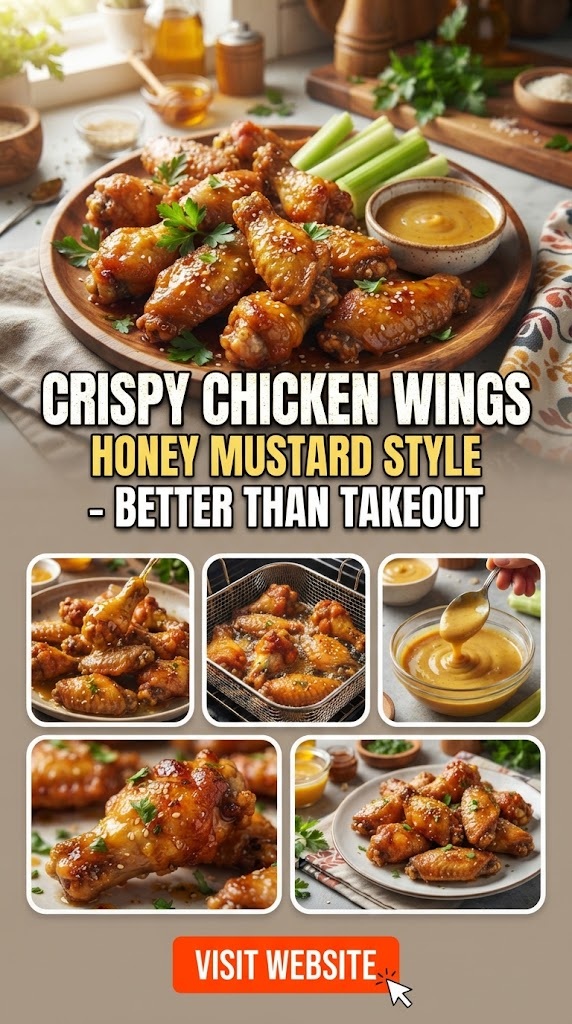
There is a universal truth in the world of appetizers: the chicken wing is king. Whether it’s a Sunday afternoon football game, a casual backyard barbecue, or a late-night craving that just won’t quit, chicken wings are the ultimate comfort food. But there is a specific subset of wing enthusiasts who look past the traditional Buffalo heat and seek something more complex, something that strikes the perfect balance between sweet, tangy, and savory.
Enter the Crispy Honey Mustard Chicken Wing.
When done correctly, these wings offer a multi-sensory experience. First, there is the visual—a golden-brown, glistening exterior that promises a satisfying crunch. Then, there is the aroma—the sharp, nose-tingling scent of mustard tempered by the floral sweetness of honey. Finally, the taste—a explosion of flavors that coat the palate, followed by the juicy, tender meat of the chicken itself.
Too often, takeout versions of this dish fall short. They arrive soggy, drowned in a cloying, corn-syrup-based sauce that lacks depth, or the chicken itself is rubbery and uninspired. Today, we are breaking down the science and the art of creating Crispy Honey Mustard Chicken Wings that aren’t just good—they are significantly better than anything you can order from a restaurant.
The Foundation: The Science of the Perfect Crunch
To achieve “better than takeout” status, we must first master the texture. A soggy wing is a failure, regardless of how good the sauce is. The goal is a skin so crispy it crackles when you bite into it, while the meat inside remains succulent.
1. The Moisture Enemy
The primary enemy of crispiness is moisture. Most chicken wings come packed in a saline solution or have residual water from the processing plant. If you take wings straight from the package to the heat, that moisture turns into steam, which “cooks” the skin rather than crisping it.
The Solution: Pat your wings bone-dry with paper towels. For the ultimate crunch, place them on a wire rack over a baking sheet and leave them uncovered in the refrigerator for 4 to 12 hours. This air-drying process allows the skin to tighten and dehydrate, leading to a superior texture.
2. The Baking Powder Trick
If you are baking or air-frying your wings, there is a secret ingredient that rivals deep-frying: aluminum-free baking powder.
When you coat wings in a small amount of baking powder (combined with salt), it raises the pH level of the chicken skin. This allows the peptide bonds in the skin to break down more efficiently, accelerating the browning process (the Maillard reaction) and creating tiny bubbles on the surface that crisp up into a shatteringly thin crust.
3. The Starch Barrier
For those who prefer a more traditional breading or a “dredge,” cornstarch is your best friend. Unlike flour, which can become heavy and doughy, cornstarch creates a thin, glass-like coating that stays crispy even after being tossed in sauce.
Choosing Your Ingredients: Quality Matters
Because the flavor profile of honey mustard is relatively simple, the quality of your ingredients will dictate the final result.
The Chicken
Look for “party wings,” which are already split into flats (wingettes) and drums (drumettes). If you buy whole wings, you’ll need to butcher them yourself by cutting through the joints and removing the wing tip. Fresh chicken is always preferable to frozen, as frozen wings often release more water during cooking, compromising the crunch.
The Honey
Avoid the generic plastic honey bears if possible. Look for raw, local honey or a high-quality Clover or Orange Blossom honey. The nuances in the honey—floral notes, earthiness, or citrus undertones—will shine through in the final glaze.
The Mustard Matrix
A great honey mustard sauce isn’t made with just one type of mustard. It’s a blend:
- Dijon Mustard: Provides the “bite” and a sophisticated sharpness.
- Yellow Mustard: Offers that classic, nostalgic tang and bright color.
- Whole Grain Mustard: Adds texture and pops of intense flavor.
The Ultimate Honey Mustard Sauce Recipe
This isn’t your average honey mustard. This is a balanced, emulsified glaze designed to cling to the wings without making them soggy.
Ingredients:
- 1/2 cup High-Quality Honey
- 1/4 cup Dijon Mustard
- 2 tbsp Yellow Mustard
- 1 tbsp Whole Grain Mustard
- 1 tbsp Apple Cider Vinegar (The acidity cuts through the sweetness)
- 1/2 tsp Garlic Powder
- 1/4 tsp Smoked Paprika (For a subtle depth)
- A pinch of Cayenne Pepper (Optional, for a “hot honey” vibe)
- 2 tbsp Melted Unsalted Butter (This provides the “velvet” finish)
Instructions:
In a medium bowl, whisk together the honey, all three mustards, vinegar, and spices. Once combined, slowly whisk in the melted butter. The butter helps the sauce emulsify, ensuring it stays thick and glossy rather than separating on the wing. Set this aside at room temperature while you cook the chicken.
Method 1: The Deep-Fried Classic (The Gold Standard)
If you want the most authentic “pub-style” experience, deep frying is the way to go.
- Heat the Oil: Use a neutral oil with a high smoke point, like peanut, canola, or vegetable oil. Heat it in a heavy-bottomed pot or a deep fryer to 350°F (175°C).
- The First Fry: Fry the wings in batches for about 8–10 minutes. They should be cooked through but not yet deeply browned.
- The Rest: Remove the wings and let them rest on a wire rack for at least 10 minutes.
- The Second Fry (The Secret): Increase the oil temperature to 375°F (190°C). Fry the wings a second time for 2–3 minutes. This “double-fry” method is the secret behind the world’s best wings; it drives out any remaining moisture and creates an indestructible crunch.
- Toss: Immediately place the hot wings in a large metal bowl, pour over the honey mustard sauce, and toss vigorously.
Method 2: The Air Fryer Revolution (The Modern Choice)
The air fryer has changed the wing game forever, providing deep-fry results with a fraction of the oil.
- Dredge: Toss your dry wings in a mixture of 1 tbsp cornstarch, 1 tsp baking powder, and a pinch of salt.
- Arrange: Place the wings in the air fryer basket in a single layer. Do not overcrowd, or they will steam instead of fry.
- Cook: Set the air fryer to 400°F (200°C). Cook for 20–25 minutes, flipping the wings halfway through.
- The Finish: Look for the skin to be bubbling and golden brown.
- Toss: Transfer to a bowl and coat with the honey mustard glaze.
Method 3: The Oven-Baked Perfection (The Crowd-Pleaser)
If you are cooking for a large group, the oven is the most efficient method.
- Prep: Preheat your oven to 425°F (220°C). Use the baking powder/salt dredge mentioned in the science section.
- The Setup: Place a wire cooling rack inside a large rimmed baking sheet. This allows hot air to circulate under the wings, preventing “soggy bottoms.”
- Bake: Bake for 45–50 minutes. There is no need to flip them if they are on a rack, but you can turn them halfway through for even browning.
- Toss: Once the skin is crispy and the internal temperature reaches 165°F (though wings are actually better at 175°F-185°F as the collagen breaks down), remove and sauce.
Why Honey Mustard? The Flavor Profile Breakdown
While Buffalo sauce relies on the heat of cayenne and the fat of butter, honey mustard is a more complex beast. It hits four of the five basic tastes:
- Sweet: From the honey. This triggers the reward centers in the brain and makes the wings “craveable.”
- Sour/Acidic: From the mustard and the apple cider vinegar. This stimulates salivation and cleanses the palate between bites.
- Salty: From the dry brine and the chicken itself. Salt enhances all other flavors.
- Bitter: Mustard seeds have a natural bitterness that adds depth, ensuring the sauce isn’t just “candy-sweet.”
When you combine these with the Umami of the chicken meat and the Fat from the crispy skin, you have a perfectly balanced culinary profile.
Pro-Tips for “Better Than Takeout” Results
1. The Temperature Check
Unlike chicken breasts, which become dry if cooked past 165°F, chicken wings are forgiving. Because they are rich in connective tissue and collagen, they actually taste better when cooked to an internal temperature of 175°F to 185°F. At this temperature, the collagen melts into gelatin, making the wings incredibly juicy and “fall-off-the-bone” tender.
2. Saucing at the Last Second
The biggest mistake people make is saucing the wings and then letting them sit. Even the crispiest wing will eventually succumb to the moisture in the sauce. Sauce your wings only when you are ready to eat. If you are serving them at a party, consider keeping the wings warm in the oven and tossing them in small batches as guests get hungry.
3. The Garnish
Don’t underestimate the power of a garnish. A sprinkle of fresh chives or scallions adds a hit of freshness that cuts through the rich sauce. A light dusting of coarse sea salt right at the end can also make the flavors pop.
Pairing Your Honey Mustard Wings
To make this a full meal or a professional-grade appetizer spread, you need the right accompaniments.
The Dipping Sauce
Even though the wings are already sauced, people love to dip.
- Spicy Ranch: Mix classic ranch with a bit of Sriracha or chipotle in adobo.
- Creamy Blue Cheese: The funk of blue cheese provides a brilliant contrast to the sweet honey mustard.
- Extra Honey Mustard: Always have a small bowl of the “clean” sauce on the side for those who want an extra dip.
The Sides
- Classic Veggies: Cold celery and carrot sticks are traditional for a reason—they provide a refreshing crunch.
- Sweet Potato Fries: The sweetness of the fries complements the honey in the wings.
- Vinegar-Based Coleslaw: Avoid a creamy slaw; instead, go for a zesty, vinegar-heavy slaw to provide a bright contrast to the fried wings.
Troubleshooting Common Issues
Why aren’t my wings crispy?
- Too Much Moisture: You didn’t dry the wings enough. Next time, try the fridge-drying method.
- Crowded Pan: If the wings are touching, they will steam. Give them space!
- Temperature Too Low: If the oil or oven isn’t hot enough, the fat won’t render properly.
Why is my sauce too thin?
- Too Much Vinegar: Balance it out with more honey or a bit more mustard.
- Butter Temperature: Ensure your butter is melted but not boiling when you whisk it in.
- Honey Quality: Some cheap honeys are watered down with corn syrup. Use a thick, high-quality honey.
Why is the sauce too spicy/pungent?
- Mustard Choice: Dijon can be very strong. If it’s too much, increase the ratio of yellow mustard or add a tablespoon of mayonnaise to mellow it out.
Variations to Try
Once you’ve mastered the classic Crispy Honey Mustard Chicken Wing, you can start experimenting with these variations:
1. Spicy Honey Mustard (The “Hot Honey” Twist)
Add 1 tablespoon of red pepper flakes or a teaspoon of your favorite hot sauce to the glaze. The heat builds on the back of the throat, perfectly balanced by the honey.
2. Garlic Honey Mustard
Sauté two cloves of minced garlic in the butter before whisking it into the sauce. The savory, aromatic garlic adds a whole new dimension to the profile.
3. Smoky Honey Mustard
Add a drop of liquid smoke or a half-teaspoon of smoked paprika to the sauce. This gives the wings a “straight off the grill” flavor, even if they were made in an air fryer.
4. Pretzel-Crusted Honey Mustard Wings
For the ultimate crunch, crush up hard pretzels and use them as a final breading before frying or baking. It’s a classic flavor pairing that works exceptionally well on chicken.
Storage and Reheating
If you happen to have leftovers (a rare occurrence!), you must know how to reheat them. Never use the microwave. The microwave will turn your crispy wings into rubbery, chewy disappointment.
- The Oven Method: Preheat to 375°F. Place the wings on a wire rack and bake for 5–8 minutes until the sauce is bubbling and the skin has regained some crunch.
- The Air Fryer Method: This is the best way to reheat wings. Set to 350°F and cook for 3–4 minutes. They will taste almost as good as they did when they were fresh.
The Cultural Significance of the Chicken Wing
In the United States, the chicken wing is more than just food; it is a cultural icon. From the legendary beginnings at the Anchor Bar in Buffalo, New York, to the massive “Wing Bowls” and the millions of pounds of wings consumed during the Super Bowl, we are a nation obsessed with this specific cut of poultry.
Originally, wings were considered “throwaway” parts of the chicken, often used only for making stock. The realization that they could be fried and tossed in sauce transformed them from waste into a multi-billion dollar industry.
Honey mustard wings, specifically, represent the evolution of the wing. They show that we have moved beyond the “how much heat can you handle?” phase and into a more culinary-focused appreciation of balance. They are sophisticated yet accessible—a “better than takeout” recipe that you can proudly serve at a dinner party or a casual hangout.
Step-by-Step Summary for Success
- Dry: Pat dry and air-dry in the fridge if possible.
- Coat: Use baking powder and salt for baking, or a double-fry for deep frying.
- Heat: Ensure your oven/fryer/air fryer is at the correct temperature before starting.
- Emulsify: Whisk your sauce thoroughly, using butter to create a glossy finish.
- Sauce: Only toss the wings in the glaze right before serving to maintain the crunch.
- Enjoy: Serve with cold drinks and plenty of napkins.
Final Thoughts
The quest for the perfect chicken wing is a journey worth taking. When you pull a tray of perfectly golden, crackling wings out of the oven and toss them in a homemade, tangy-sweet honey mustard glaze, you realize why takeout often feels like a compromise.
By understanding the physics of moisture, the chemistry of baking powder, and the culinary balance of flavors in the sauce, you aren’t just cooking; you are engineering a superior dining experience. These Crispy Honey Mustard Chicken Wings are a testament to the fact that with a little patience and the right techniques, the best meal in town is the one coming out of your own kitchen.
Whether you’re a seasoned home cook or a beginner looking to impress, this recipe is your ticket to legendary status at your next gathering. Forget the delivery app, turn off the phone, and get the oil heating. The perfect wing awaits.
Frequently Asked Questions
Can I use frozen wings?
Yes, but you must thaw them completely first. Once thawed, follow the drying steps religiously. Frozen wings contain much more internal moisture, so they require extra effort to get truly crispy.
Is there a healthy version?
The air fryer and oven-baked versions are significantly lower in calories than the deep-fried version. To make it even healthier, you can substitute the honey with a sugar-free alternative (like Allulose) and use a light butter substitute, though the flavor and texture will vary slightly.
What’s the best oil for frying?
Peanut oil is the gold standard for frying chicken because of its high smoke point and neutral flavor. However, if allergies are a concern, canola oil is an excellent and affordable alternative.
How do I make the wings “extra sticky”?
If you prefer a thick, tacky glaze that really sticks to your fingers, simmer the honey mustard sauce in a small saucepan for 3–5 minutes before tossing. This reduces the water content and thickens the sugars in the honey.
Can I grill these wings?
Absolutely. To grill honey mustard wings, cook them over indirect heat until the skin is crispy and the meat is cooked through. In the last 5 minutes of grilling, move them to direct heat to char the skin slightly, then toss them in the sauce. Be careful not to put the sauce on too early, as the honey will burn quickly over an open flame.
Nutrition Facts (Per Serving – Approx. 6 Wings)
- Calories: 450–550 (depending on cooking method)
- Protein: 25g
- Total Fat: 30g
- Carbohydrates: 18g
- Sugars: 15g
- Sodium: 600mg
Note: Nutritional values are estimates. Deep-frying will increase fat and calorie counts compared to air-frying or baking.
Conclusion
The “Better Than Takeout” Crispy Honey Mustard Chicken Wing is a dish of precision. It’s about respecting the ingredient and understanding how heat and acidity interact. When you bite into that first wing—feeling the crunch, tasting the zing of the Dijon, and the smooth finish of the honey—you’ll know that the effort was worth it.
You don’t need a professional kitchen or a culinary degree to master this. You just need good chicken, a few types of mustard, and the secret weapon: patience. Now, go forth and conquer your kitchen, one wing at a time.