
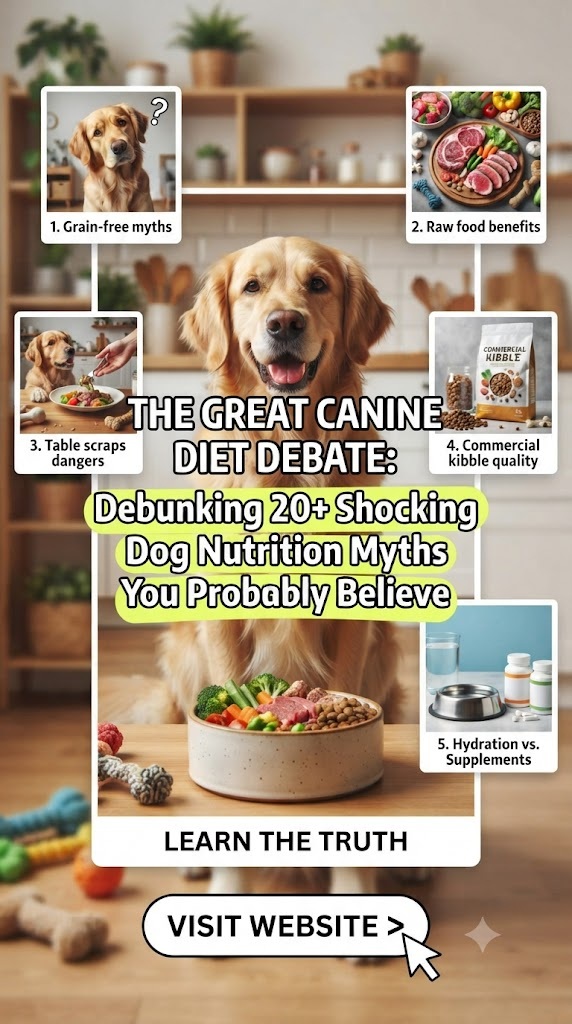
The Great Canine Diet Debate: Debunking 20+ Shocking Dog Nutrition Myths You Probably Believe
In the world of modern pet ownership, we have moved past seeing dogs as mere “yard animals.” They are our family members, our “fur babies,” and our constant companions. Naturally, this shift in status has led to an explosion of interest in canine nutrition. Everyone wants their dog to live forever, but the path to that longevity is paved with conflicting advice, aggressive marketing, and outright pseudoscience.
From the “raw food” fanatics to the “grain-free” advocates, and the “kibble is poison” camp, the noise is deafening. How do you separate marketing fluff from biological fact? This comprehensive guide dives deep into the most persistent dog nutrition myths, backed by veterinary science and nutritional research, to help you make the best choice for your dog’s bowl.
The Evolutionary Argument: “Dogs are Wolves”
Myth 1: Dogs are Obligate Carnivores
One of the most common arguments used to sell high-meat diets is that dogs are “basically wolves” and therefore must eat like them. While it is true that Canis lupus familiaris shares 99.9% of its DNA with the gray wolf, that 0.1% difference is monumental.
During the thousands of years of domestication, dogs evolved alongside humans. A landmark study published in the journal Nature revealed that dogs have significantly more copies of the AMY2B gene—the gene responsible for digesting starch—than wolves do. This evolutionary adaptation allows dogs to thrive on an omnivorous diet that includes carbohydrates.
The Reality: Dogs are facultative carnivores (or scavenging omnivores). They prefer meat but can effectively derive nutrients from grains, fruits, and vegetables.
Myth 2: The “Ancestral Diet” is the Gold Standard
The “Ancestral Diet” marketing suggests that because wolves don’t eat corn, dogs shouldn’t either. However, this ignores two things: average lifespan and nutritional optimization. A wolf in the wild rarely lives past age five or six. Our goal for pet dogs is 12 to 15 years or more.
Wild canids eat out of necessity, not for “optimal wellness.” They consume the stomach contents of their prey (which include fermented grains and grasses) and often scavenge for fallen fruit or tubers. Feeding your dog like a wild animal ignores the nutritional science that has extended the domestic dog’s lifespan by decades.
The “Filler” Fallacy: Grains, Corn, and Soy
Myth 3: Corn is Just a “Cheap Filler”
If you look at the back of a bag of premium dog food, you might see “No Corn, No Wheat, No Soy” emblazoned in bright letters. This has led many owners to believe corn is nutritionally empty.
The Reality: Corn is a nutritional powerhouse when processed correctly. It provides:
- Linoleic Acid: An essential fatty acid for skin and coat health.
- Highly Digestible Carbohydrates: A vital energy source.
- Antioxidants: Like beta-carotene and vitamin E.
- Fiber: Essential for gut microbiome health.
The “filler” myth arose because corn is inexpensive, but in the world of nutrition, “cheap” does not always mean “useless.”
Myth 4: Grains Cause Most Dog Allergies
When a dog starts itching or develops an ear infection, the owner’s first instinct is often to “cut out the grains.” However, veterinary dermatology research shows that grain allergies are actually quite rare.
The Reality: The most common food allergens for dogs are animal proteins. According to a study by the BMC Veterinary Research, the top allergens are:
- Beef
- Dairy
- Chicken
- Lamb Grain allergies (like wheat gluten) account for a tiny fraction of diagnosed food sensitivities.
Myth 5: Grain-Free Diets are Healthier
This is perhaps the most dangerous myth currently circulating. The “grain-free” trend was a marketing pivot borrowed from the human “Paleo” and “Gluten-Free” movements.
In 2018, the FDA began investigating a potential link between grain-free diets (specifically those high in peas, lentils, and chickpeas) and Dilated Cardiomyopathy (DCM)—a serious heart condition. While the research is ongoing, the current consensus is that swapping grains for high concentrations of legumes may interfere with taurine absorption or provide other anti-nutrients that damage the heart muscle.
The Truth About “By-Products” and Labels
Myth 6: By-Products are “Floor Sweepings” and “Beaks and Hooves”
The word “by-product” sounds unappetizing to humans, which is why boutique pet food companies use it as a scare tactic. We imagine feathers, hair, and floor waste.
The Reality: According to AAFCO (Association of American Feed Control Officials) definitions, “poultry by-product meal” consists of the ground, rendered, clean parts of the carcass of slaughtered poultry, such as necks, feet, undeveloped eggs, and intestines—exclusive of feathers.
In many ways, by-products are more nutritious than muscle meat. In the wild, the first things a predator eats are the liver, kidneys, and lungs because they are packed with Vitamin A, D, and B vitamins. By feeding your dog “by-products,” you are often giving them a more complete nutrient profile than a “chicken breast only” diet.
Myth 7: “Human-Grade” Means Better Nutrition
The term “Human-Grade” is a legal marketing term, not a nutritional one. It simply means the food was handled and processed in a facility that meets the standards for human food production.
The Reality: A “human-grade” stew of chicken and carrots could be completely unbalanced for a dog’s long-term needs. A dog requires a specific ratio of calcium to phosphorus, which is often missing in “human-grade” home-style meals unless they are formulated by a board-certified veterinary nutritionist.
Myth 8: Look for the First Ingredient (The “Meat First” Myth)
We’ve been told for years to ensure meat is the first ingredient on the label. This is a trick of “ingredient splitting.” Ingredients are listed by weight before processing.
The Reality: Whole chicken is about 70% water. Once that chicken is cooked and the water is removed, its actual weight in the final kibble might be much lower, potentially placing it behind the “grains” or “meals” on the list. A food that lists “Chicken Meal” as the first ingredient actually contains more protein than one that lists “Whole Chicken.”
Raw Feeding: Miracle or Menace?
Myth 9: Raw Meat is “Bio-available” and Natural
Raw feeding (BARF or PMR diets) has a cult-like following. Proponents claim it leads to shinier coats, smaller stools, and more energy.
The Reality: While many dogs do thrive on raw diets, the risks are significant and often downplayed.
- Pathogen Risk: Studies consistently find Salmonella, Listeria, and E. coli in raw pet food samples. This is a risk not just to the dog, but to the humans in the house (especially children and the elderly) through cross-contamination or the dog’s saliva.
- Nutritional Imbalance: DIY raw diets are notoriously difficult to balance. Without the correct ratio of bone (calcium) to organ (vitamins), dogs can develop metabolic bone diseases or organ toxicity.
Myth 10: “Bones are Safe if They are Raw”
The myth goes that raw bones don’t splinter like cooked bones. While raw bones are softer, they still pose a risk of:
- Fractured Teeth: Canines are not designed to crunch through heavy marrow bones (the “thigh bones” of cows).
- Gastrointestinal Obstruction: Large chunks of bone can get stuck in the esophagus or intestines.
- Perforation: Even raw bones can have sharp edges that tear the lining of the stomach.
Human Foods: The Great Confusion
Myth 11: “People Food” is Bad for Dogs
This is a generalization. Many “people foods” are excellent for dogs. The danger isn’t the food itself; it’s the seasoning and the calories.
The Reality: Plain steamed broccoli, blueberries, pumpkin, and lean turkey are fantastic toppers. The “bad” reputation comes from “table scraps”—fatty steak trimmings (which can cause pancreatitis) or salty, garlicky leftovers.
Myth 12: Garlic is a Natural Flea Preventative
There is a dangerous persistent myth that feeding garlic to dogs will repel fleas. The Reality: Garlic, along with onions, leeks, and chives, belongs to the Allium family. These contain thiosulfate, which causes oxidative damage to red blood cells, leading to Heinz body anemia. While a tiny bit might not kill a large dog, the cumulative effect is toxic. It is an ineffective and dangerous way to manage parasites.
Myth 13: Dogs Can’t Eat Any Fruit Because of Sugar
While dogs shouldn’t eat a fruit bowl every day, many fruits are beneficial.
- Safe: Blueberries (antioxidants), Strawberries, Bananas (in moderation), and Apples (no seeds).
- Lethal: Grapes and Raisins. These can cause acute kidney failure in dogs, and the toxic dose is unpredictable—some dogs react to just one or two.
Protein and Weight Management
Myth 14: High Protein Causes Kidney Failure
This myth stems from old studies on rats, not dogs. For a long time, veterinarians believed that high protein “stressed” the kidneys.
The Reality: Modern research shows that high-protein diets do not cause kidney disease in healthy dogs. In fact, as dogs age, they need more high-quality protein to maintain muscle mass (to prevent sarcopenia). Protein restriction is only recommended for dogs already in the late stages of diagnosed kidney failure.
Myth 15: If My Dog is Hungry, I Should Feed Him More
Dogs are evolutionary “gorge feeders.” In the wild, they don’t know when their next meal is coming, so they are biologically programmed to eat whenever food is available.
The Reality: Most dogs will act “starving” even if they are overweight. Labradors, in particular, often have a genetic mutation (the POMC gene) that prevents them from feeling full. Obesity is the #1 nutritional disease in dogs, shortening their lives by up to two years. Use a Body Condition Score (BCS) chart instead of your dog’s “puppy eyes” to determine portions.
The Marketing of Life Stages and Breeds
Myth 16: Breed-Specific Kibble is Essential
Is there really a difference between “Golden Retriever Kibble” and “German Shepherd Kibble”? The Reality: Mostly, no. These are largely marketing strategies. While kibble size and shape might change (to encourage chewing in fast eaters or to accommodate flat-faced breeds), the nutritional requirements of most adult dogs are remarkably similar. The exception is Large Breed Puppy food, which is critical for controlling growth rates to prevent hip dysplasia.
Myth 17: Puppies Should Eat Adult Food to Prevent “Growing Too Fast”
Some owners of Great Danes or Mastiffs feed adult food to puppies to slow their growth. The Reality: This is dangerous. Adult food does not have the correct calcium-to-phosphorus ratio for a developing skeleton. Puppies fed adult food may develop permanent skeletal deformities. Always use a formula specifically designed for “Puppies” or “Large Breed Puppies” until they reach skeletal maturity.
The Logistics of Feeding
Myth 18: Kibble “Cleans” Teeth
This is one of the most successful marketing myths in history. The idea is that the “crunch” scrapes away plaque. The Reality: Most dogs swallow kibble whole or shatter it easily. Think about it: would eating a cracker help clean your teeth? Dental health is primarily determined by genetics, saliva pH, and—most importantly—manual brushing. Only specific, VOHC-approved (Veterinary Oral Health Council) dental diets have the fiber matrix necessary to actually scrub teeth.
Myth 19: Dogs Need Variety to Not Get Bored
Humans hate eating the same thing every day, so we project that onto our dogs. The Reality: Dogs have about 1,700 taste buds, while humans have about 9,000. They are much more interested in smell than flavor variety. Suddenly switching food brands actually disrupts the gut microbiome, leading to diarrhea and upset stomachs. If you want to provide variety, use healthy “toppers” rather than changing the base diet.
Myth 20: Free-Feeding (Leaving the Bowl Out) is Fine
Leaving a bowl of food out all day allows the dog to “regulate their own appetite.” The Reality: Very few dogs can self-regulate. Free-feeding leads to obesity and makes it impossible to monitor if your dog’s appetite has decreased—which is often the first sign of illness. Scheduled feedings create a routine and allow you to use food as a training reward.
How to Actually Choose a Dog Food: The 5-Step Checklist
Now that we’ve debunked the myths, how do you actually find a good food? Forget the “Top 10” lists on the internet, which are often sponsored or written by people without veterinary training. Follow these scientific steps:
1. Check for the AAFCO Statement
Look for a sentence on the bag that says: “This product is formulated to meet the nutritional levels established by the AAFCO Dog Food Nutrient Profiles.” This ensures the food is “complete and balanced.” Without this, your dog could develop severe deficiencies.
2. Research the Manufacturer
Does the company employ at least one full-time Board Certified Veterinary Nutritionist (DACVIM)? Do they own their own manufacturing plants, or do they “co-pack” (let someone else make it)? Large, established brands like Purina, Royal Canin, and Hill’s Science Diet are often criticized for being “big corp,” but they have the most rigorous testing and quality control in the world.
3. Look Past the “Ingredient List”
As we’ve learned, the ingredient list can be manipulated. Focus instead on the Nutrient Analysis. A food is the sum of its parts. You are feeding nutrients (amino acids, fatty acids, minerals), not just ingredients.
4. Ignore the “No Fillers” Buzzwords
If a bag uses “Fear-Based Marketing” (e.g., “No scary chemicals!”, “No nasty by-products!”), be wary. Science-based companies focus on what is in the food and why it’s there, rather than what isn’t.
5. Monitor Your Dog, Not the Hype
The best food for your dog is the one they thrive on. Indicators of a good diet include:
- Firm, consistent stools.
- A shiny, non-greasy coat.
- Clear eyes.
- Consistent energy levels.
- A healthy weight (you should be able to feel, but not see, their ribs).
Conclusion: The Power of Critical Thinking
In the digital age, everyone is an “expert.” Influencers with no medical background often promote extreme diets because they are “clickable” and “viral.” However, canine nutrition is a complex science that involves biochemistry, physiology, and long-term clinical trials.
The biggest myth of all is that there is a “one-size-fits-all” perfect food. Every dog is an individual. Your senior Chihuahua has vastly different needs than a working Border Collie or a growing Great Dane puppy.
When in doubt, ignore the flashy commercials and the “ancestral” imagery. Talk to your veterinarian—the only person who knows your dog’s medical history and has the education to help you navigate the murky waters of the pet food aisle. Feeding your dog shouldn’t be a source of anxiety; it should be a way to show love through the lens of science.