
The Silent Killers in Your Home: A Comprehensive Guide to Dog Poisoning Symptoms and Life-Saving Actions
Our dogs are more than just pets; they are family members, loyal companions, and the heart of our homes. Because of their curious nature and “eat first, ask questions later” philosophy, they are unfortunately prone to accidental poisoning. Every year, thousands of dogs end up in emergency clinics due to ingesting substances that are perfectly safe for humans but lethal for canines.
Understanding the subtle and overt signs of dog poisoning isn’t just helpful—it’s a critical skill for every pet parent. In the world of veterinary toxicology, time is the most precious resource. Recognizing a symptom early can be the difference between a minor stomach upset and a tragic loss.
This guide delves deep into the symptoms of dog poisoning, the hidden toxins lurking in your cupboards, and the immediate steps you must take if the unthinkable happens.
The Red Flag Hierarchy: Categorizing Symptoms of Poisoning
Symptoms of poisoning in dogs rarely look the same. The reaction depends on the toxin’s chemical makeup, the amount ingested, and the size of the dog. However, we can generally categorize symptoms into four primary “attack zones” in the body.
1. Gastrointestinal Distress (The Most Common Signs)
The digestive tract is usually the first point of contact for an ingested toxin. This is the body’s way of trying to expel the poison.
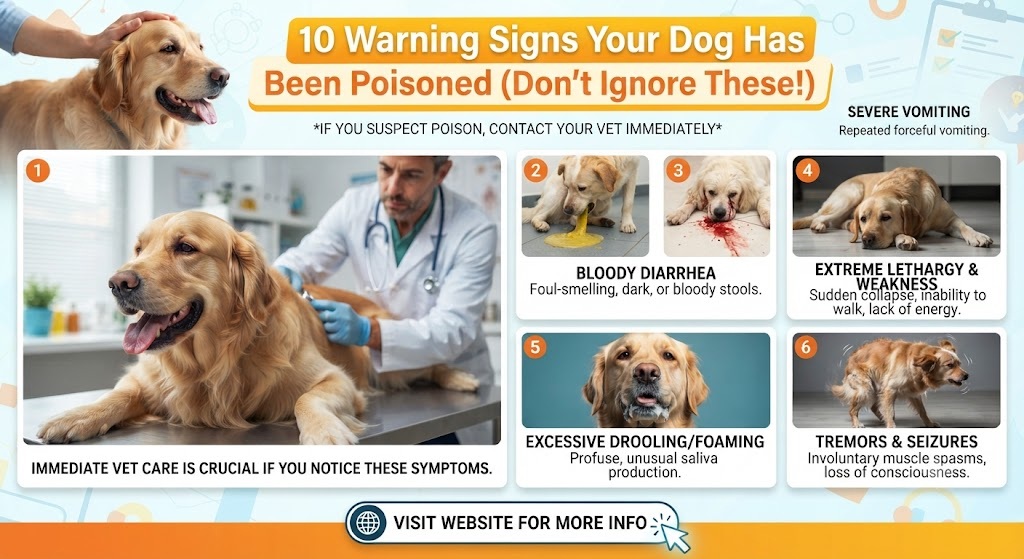
- Persistent Vomiting: While dogs vomit for many reasons, projectile or repetitive vomiting is a major red flag.
- Severe Diarrhea: Watch for blood in the stool (which may look like bright red streaks or dark, tarry “coffee grounds”).
- Excessive Salivation/Drooling: This often indicates a chemical burn in the mouth or a neurological reaction to a toxin.
- Loss of Appetite: If your food-motivated dog suddenly refuses a high-value treat, something is wrong.
2. Neurological and Behavioral Changes
Many toxins—including common household cleaners and certain plants—attack the central nervous system.
- Seizures and Tremors: This can range from full-body convulsions to localized muscle twitching.
- Ataxia (Drunken Gait): If your dog is stumbling, leaning against walls, or seems “wobbly,” they may have ingested something that affects their coordination.
- Hyperactivity or Lethargy: Sudden, unexplained bursts of frantic energy or, conversely, a dog that won’t get up or respond to their name.
- Loss of Consciousness: This is a medical emergency of the highest order.
3. Respiratory and Cardiac Signs
These symptoms are often the most life-threatening, as they interfere with the dog’s ability to circulate oxygen.
- Difficulty Breathing: Labored breaths, gasping, or very shallow breathing.
- Rapid or Irregular Heartbeat: You may feel your dog’s chest thumping frantically.
- Blue or Pale Gums: Healthy gums should be bubblegum pink. If they are blue, white, or extremely pale, it indicates a lack of oxygen or internal bleeding.
4. External and Internal Physical Indicators
- Bruising and Bleeding: Some poisons, like certain rodenticides, prevent blood from clotting. Look for unexplained nosebleeds or small purple spots on the skin (petechiae).
- Increased Thirst and Urination: Often a sign of kidney or liver failure triggered by toxins like grapes or antifreeze.
- Swelling: Specifically around the face, snout, or paws, which can indicate an allergic reaction to a sting or a topical toxin.
The “Dirty Dozen”: Most Common Household Toxins for Dogs
To protect your pet, you must know what you’re fighting. Many of the most dangerous substances are common items we use every day.
1. Chocolate, Coffee, and Caffeine
Theobromine and caffeine are methylxanthines. While humans metabolize them easily, dogs do not.
- The Danger: Dark chocolate and baking chocolate are the most toxic.
- Symptoms: Panting, excessive thirst, racing heart, and tremors.
2. Xylitol (The Invisible Killer)
This sugar substitute is found in sugar-free gum, peanut butter, toothpaste, and “diet” baked goods.
- The Danger: It causes a massive insulin surge, leading to a life-threatening drop in blood sugar (hypoglycemia) and liver failure.
- Symptoms: Vomiting, followed by weakness and seizures within 30 minutes.
3. Grapes and Raisins
The exact toxin in grapes is still a subject of scientific debate, but the results are clear: they cause acute kidney failure.
- The Danger: Even a single raisin can be fatal to some dogs, while others may seem fine. There is no “safe” dose.
- Symptoms: Initial vomiting and lethargy, followed by a total cessation of urination as kidneys fail.
4. Rodenticides (Rat Poison)
These are designed to be palatable (they often smell like grain or peanut butter), making them incredibly tempting to dogs.
- The Danger: Most cause internal bleeding by stopping blood clotting, while others cause brain swelling or high calcium levels.
- Symptoms: It may take 3-5 days for symptoms like coughing, nosebleeds, and weakness to appear.
5. Human Medications (NSAIDs and Acetaminophen)
Ibuprofen, Naproxen, and Tylenol are common culprits.
- The Danger: These can cause severe stomach ulcers and kidney or liver failure.
- Symptoms: Black, tarry stools, abdominal pain, and yellowing of the eyes (jaundice).
6. Onions, Garlic, and Chives
These contain N-propyl disulfide, which damages a dog’s red blood cells.
- The Danger: It leads to “Heinz Body Anemia,” where the red blood cells literally burst.
- Symptoms: Pale gums, high heart rate, and reddish-orange urine.
7. Macadamia Nuts
The specific toxin is unknown, but the effect on dogs is profound.
- The Danger: Even a small amount can cause temporary paralysis.
- Symptoms: Weakness in the back legs, tremors, and vomiting.
8. Antifreeze (Ethylene Glycol)
It has a sweet taste that dogs love.
- The Danger: It crystallizes in the kidneys, causing permanent failure.
- Symptoms: “Drunken” behavior for a few hours, followed by a period where the dog seems to “recover” before the kidneys shut down.
9. Household Plants
Many common plants are toxic.
- Sago Palms: Extremely lethal; every part of the plant is poisonous.
- Lilies: Highly toxic (especially to cats, but also dangerous for dogs).
- Azaleas: Can cause cardiovascular collapse.
10. Fertilizers and Mulch
- Cocoa Bean Mulch: Contains residual theobromine (the same toxin as chocolate).
- Fertilizers with Blood or Bone Meal: These can cause “food bloat” or pancreatitis if ingested in large amounts.
11. Alcohol
Never give a dog alcohol. Their livers are not equipped to process ethanol.
- Symptoms: Drop in body temperature, slow breathing, and coma.
12. Essential Oils
Tea tree oil, peppermint oil, and cinnamon oil can be toxic if applied topically or ingested.
- Symptoms: Skin irritation, lethargy, and lack of coordination.
The Timeline of Toxicity: Why You Can’t “Wait and See”
The biggest mistake a pet owner can make is waiting for symptoms to appear before calling a vet. By the time a dog shows clinical signs of poisoning, the toxin has likely already been absorbed into the bloodstream.
The Absorption Window (0-2 Hours)
If you catch your dog in the act of eating something toxic, this is the “Golden Window.” A veterinarian can often induce vomiting or use activated charcoal to bind the toxin before it reaches the small intestine.
The Latent Period (2-12 Hours)
During this phase, the dog may appear completely normal. However, internally, the toxin is being processed by the liver or kidneys. This is the “calm before the storm.”
The Crisis Phase (12-48+ Hours)
This is when organ failure or neurological damage becomes apparent. Treatment at this stage is much more expensive, invasive, and has a lower success rate.
Emergency Protocol: What to Do If You Suspect Poisoning
If your dog has eaten something suspicious or is showing symptoms, follow these steps immediately. Do not panic; your dog needs you to be calm and decisive.
Step 1: Secure the Dog
Move your dog away from the source of the poison. Ensure they are in a safe, quiet space where they won’t hurt themselves if they have a seizure.
Step 2: Identify the Substance
If possible, grab the packaging, the bottle, or a sample of the plant. If your dog has already vomited, take a photo or a sample of the vomit to show the vet—it can contain vital clues.
Step 3: Call Professional Help
Do not wait. Contact one of the following:
- Your Primary Veterinarian: If it’s during business hours.
- Emergency Vet Clinic: If it’s after hours.
- Pet Poison Helpline: (855) 764-7661 (A fee usually applies, but they provide expert toxicology advice).
- ASPCA Animal Poison Control Center: (888) 426-4435.
Step 4: Do NOT Induce Vomiting Unless Instructed
This is a common myth that can be dangerous. If a dog has swallowed a caustic substance (like bleach) or a sharp object, inducing vomiting can cause a second round of burns or an esophageal tear. Only use hydrogen peroxide to induce vomiting if a licensed veterinarian specifically tells you to do so.
Step 5: Follow Instructions to the Letter
The vet may ask you to bring the dog in immediately or may give you home-care instructions. If you are heading to the clinic, call them while you are en route so they can prepare the “crash cart” for your arrival.
Preventive Measures: Poison-Proofing Your Home
Prevention is always cheaper and less stressful than an emergency vet visit. Use this checklist to secure your home.
The Kitchen
- Lock the Trash: Use a dog-proof bin or keep it inside a pantry.
- Check Ingredients: Never give your dog human food without checking for Xylitol (Birch Sugar) or onion powder.
- Counter Surfing: Keep all chocolate, grapes, and nuts in high cabinets, never on the counter.
The Bathroom and Bedroom
- Medication Safety: Never leave pill bottles on nightstands. Dogs can easily chew through plastic bottles.
- Cleaning Supplies: Store bleach, ammonia, and drain cleaners in cabinets with child-safety locks.
The Garage and Yard
- Antifreeze: Clean up spills immediately with absorbent material. Consider switching to “pet-safe” antifreeze (propylene glycol), though it should still be kept out of reach.
- Pesticides: Avoid using “bait stations” for rats or snails where your dog can reach them.
- Plant Identification: Use an app to identify every plant in your yard. If you have Sago Palms, consider removing them entirely.
Common Myths About Dog Poisoning
Myth #1: “A little bit of chocolate won’t hurt.”
- The Reality: While a single M&M might not kill a Labrador, a small amount of dark chocolate can kill a Yorkie. Size and concentration matter.
Myth #2: “If he’s not acting sick, he’s fine.”
- The Reality: Many toxins, like rat poison or antifreeze, have a “honeymoon phase” where the dog looks fine for hours or days while their organs are being destroyed.
Myth #3: “Milk can neutralize poison.”
- The Reality: Milk does not neutralize most poisons and can actually cause pancreatitis or diarrhea, making the situation worse.
Myth #4: “Dogs know what’s bad for them.”
- The Reality: Dogs evolved as scavengers. Their instinct is to eat high-calorie items quickly. They have no natural “poison detector” for modern chemicals or exotic plants.
The Cost of Care: Why Pet Insurance Matters
Treating a poisoned dog can be incredibly expensive. Between emergency exam fees, blood work, IV fluids, activated charcoal, and potentially several days of hospitalization, the bill can easily climb into the thousands of dollars.
Pet insurance is a lifesaver in these scenarios. Most plans cover accidental poisoning, allowing you to make medical decisions based on your dog’s needs rather than your bank account balance.
Conclusion: Vigilance is the Best Medicine
The bond between a human and a dog is built on trust. Your dog trusts you to keep their environment safe, and in return, they provide unconditional love. While you can’t watch your pet every single second, you can educate yourself on the risks.
By memorizing the symptoms—the staggering, the pale gums, the unusual vomiting—and knowing exactly which household items pose a threat, you are taking the most important step in being a responsible pet owner.
If you suspect your dog has been poisoned, act now. It is always better to have a “false alarm” at the vet than to wait until it is too late. Keep the number of the Pet Poison Helpline on your fridge, secure your cabinets, and stay vigilant. Your furry friend’s life depends on it.