
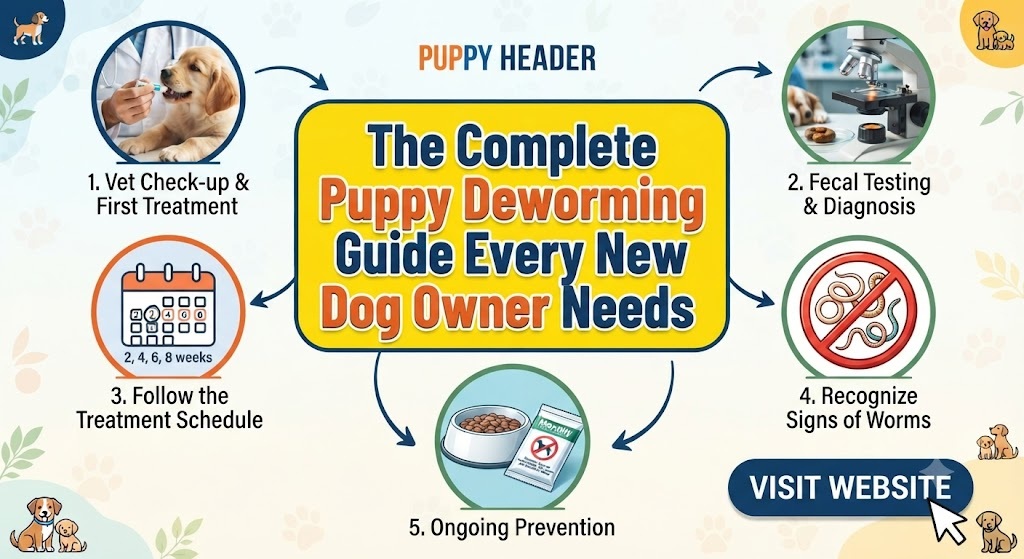
Deworming Bible: Everything You Need to Protect Your New Best Friend
Welcoming a new puppy into your home is a whirlwind of wagging tails, puppy breath, and—inevitably—a few surprises. But among the chewed slippers and potty training mishaps, there is a hidden reality that every new pet parent must face: parasites.
If the thought of tiny organisms living inside your puppy makes your skin crawl, you aren’t alone. However, deworming is one of the most critical aspects of early canine healthcare. Almost every puppy is born with worms or acquires them shortly after birth. Without proper treatment, these “biological hitchhikers” can cause stunted growth, severe illness, and even death.
In this comprehensive guide, we are going to dive deep into the world of puppy parasites. From the “Big Five” worms to the exact schedule you need to follow, and the gross-but-necessary details of what happens after treatment—this is your roadmap to a worm-free, healthy dog.
The Shocking Truth: Why Almost All Puppies Have Worms
It sounds like a failure of hygiene, but it isn’t. Even the most pristine, high-end champion bloodline puppies often arrive with a belly full of worms. How is this possible?
- Transplacental Transmission: Many types of roundworms have a “dormant” stage in the mother dog’s muscle tissue. When she becomes pregnant, the hormones of pregnancy “wake up” these larvae, which then migrate through the placenta and infect the puppies before they are even born.
- Transmammary Transmission: Once the puppies are born, the larvae can migrate to the mother’s mammary glands. As the puppies nurse on that first nutrient-rich colostrum, they are also ingesting microscopic worm larvae.
- The Environment: Puppies explore the world with their mouths. A single blade of grass can hold microscopic eggs from a passing neighbor’s dog or a stray cat.
Because the infection rate is nearly 100% in newborns, veterinarians treat deworming as a standard “when,” not an “if.”
Meet the Villains: The 5 Most Common Internal Parasites
To fight the enemy, you have to know them. Not all worms are created equal, and some are far more dangerous than others.
1. Roundworms (The Spaghetti Strands)
Roundworms (Toxocara canis) are the most common parasite found in puppies. They are long, white, and look remarkably like cooked spaghetti. They live in the intestines, consuming the nutrients your puppy needs to grow.
- The Danger: Large infestations can cause intestinal blockage or a “potbellied” appearance.
- Zoonotic Risk: High. Humans (especially children) can contract roundworms, which can lead to organ damage or even blindness in rare cases.
2. Hookworms (The Vampires)
Hookworms are tiny, blood-sucking parasites that attach themselves to the lining of the small intestine. Because they are so small, you rarely see them in the stool.
- The Danger: Because they drink blood, a heavy hookworm infestation can lead to severe anemia and death in small puppies.
- Symptoms: Pale gums, black/tarry stools, and lethargy.
3. Tapeworms (The Rice Grains)
If you see something that looks like a wiggling grain of white rice stuck to your puppy’s fur near their tail, you’re looking at a tapeworm segment. Puppies usually get these by swallowing an infected flea.
- The Danger: While usually less “deadly” than hookworms, they steal vital nutrients and cause intense itching (the classic “butt scoot”).
4. Whipworms (The Hidden Threat)
Whipworms live in the large intestine and are much harder to detect because they produce fewer eggs. They are shaped like a tiny whip.
- The Danger: They cause chronic watery diarrhea, weight loss, and general “unthriftiness” in puppies.
5. Heartworms (The Silent Killers)
Unlike the others, heartworms live in the heart and pulmonary arteries. They are transmitted exclusively through mosquito bites.
- The Danger: Heartworms are fatal if untreated. Treatment for an adult infection is painful, expensive, and dangerous for the dog. Prevention is the only sane choice.
The Master Deworming Schedule: A Timeline for Success
Because of the life cycle of these parasites, a single dose of medicine is never enough. Dewormers usually only kill adult worms, leaving larvae and eggs behind to hatch later. You must hit them in waves.
The 2-4-6-8 Rule
Veterinarians generally recommend the following schedule for new puppies:
- 2 Weeks Old: First deworming (usually administered by the breeder).
- 4 Weeks Old: Second dose to catch larvae that have matured.
- 6 Weeks Old: Third dose, often coinciding with the first round of puppy shots.
- 8 Weeks Old: Fourth dose, usually given when the puppy goes to their forever home.
- 12 Weeks & 16 Weeks: Continued doses during the final puppy vaccination rounds.
The Maintenance Phase
Once your puppy reaches six months of age, they should be transitioned to a monthly broad-spectrum preventative. Most modern heartworm pills (like Heartgard, NexGard Spectra, or Simparica Trio) also contain ingredients that kill roundworms and hookworms every 30 days.
Telltale Signs: How to Know Your Puppy Has Worms
Sometimes the signs are obvious, and sometimes they are subtle. Keep a “veterinary eye” out for these red flags:
- The “Potbelly”: If your puppy looks like they swallowed a tennis ball but their ribs are still visible, that distended belly is a classic sign of a heavy roundworm load.
- The Scoot: Dragging their rear end across the carpet is more than just a funny video for TikTok; it’s a sign of irritation from tapeworms or impacted anal glands.
- Vomiting & Diarrhea: If your puppy vomits and you see a “spaghetti” look-alike in the mess, you have a confirmed case of roundworms.
- Dull Coat: Parasites steal the fats and proteins needed for a shiny coat. A “wormy” puppy often has dry, brittle fur.
- Coughing: This is a scary one. Some worm larvae migrate through the lungs before ending up in the gut. If your puppy has a persistent cough, it could be “larval migrans” or heartworm.
- Visible Evidence: Checking the stool is part of being a dog owner. Look for moving segments (tapeworms) or long strands (roundworms).
Choosing the Right Treatment: OTC vs. Prescription
When you walk into a pet store, you’ll see dozens of deworming products. It’s tempting to grab the $10 bottle, but here is what you need to know about the active ingredients.
Common Active Ingredients:
- Pyrantel Pamoate: Extremely safe and effective against roundworms and hookworms. This is the “gold standard” for very young puppies.
- Fenbendazole: A broad-spectrum power hitter. It kills roundworms, hookworms, whipworms, and even Giardia (a protozoan parasite).
- Praziquantel: The only ingredient that reliably kills tapeworms. If your dewormer doesn’t have this, it won’t touch the “rice grains.”
- Ivermectin/Milbemycin: Found in monthly heartworm preventatives.
The “Store-Bought” Danger
Many over-the-counter (OTC) dewormers use outdated chemicals or concentrations that are either too weak to work or harsh on a puppy’s stomach. Furthermore, if you use a “general” dewormer for a specific parasite it wasn’t designed for, you are wasting money and letting the parasite thrive. Always consult your vet before administering any medication.
What Happens After You Give the Medicine?
This is the part most blogs skip, but it’s the part that panics owners the most. Here is what to expect in the 24–48 hours after deworming:
1. The “Worm Explosion”
It is completely normal (though terrifying) to see dead or dying worms in your puppy’s stool after treatment. This means the medicine is working! Some worms might even be wiggling slightly—don’t panic, they are on their way out.
2. Mild Lethargy
Your puppy’s body is processing the “die-off” of these parasites. They might be a little sleepy for a few hours.
3. Loose Stool
The irritation of the worms detaching from the intestinal wall often causes a bit of diarrhea. If it lasts more than 24 hours or contains significant blood, call the vet.
4. Increased Appetite
Once the “uninvited guests” stop stealing their food, your puppy might suddenly act like they haven’t eaten in years.
The Human Factor: Can You Get Worms from Your Puppy?
The short answer is Yes.
Internal parasites are “zoonotic,” meaning they can jump from animals to humans.
- Roundworms: If a human ingests roundworm eggs (usually through contaminated soil or unwashed hands), the larvae can migrate to the eyes or brain. This is why it is vital to teach children to wash their hands after playing with the puppy.
- Hookworms: These can actually penetrate human skin. If you walk barefoot in a yard where an infected puppy has defecated, you can contract “Cutaneous Larva Migrans,” which causes itchy, red tracks under the skin.
The Golden Rule: Scoop the poop immediately. Don’t let feces sit in the yard where eggs can leach into the soil.
Debunking the “Natural” Deworming Myths
In the age of “holistic” pet care, many owners are looking for natural alternatives to chemicals. While well-intentioned, these “hacks” can be dangerous.
- Myth: Garlic Kills Worms.
- The Reality: Garlic is actually toxic to dogs in high doses (it can cause Heinz Body Anemia). It does very little to clear a significant worm infestation.
- Myth: Pumpkin Seeds Work.
- The Reality: Pumpkin seeds contain cucurbitacin, which can paralyze some worms. However, the amount needed to clear a puppy’s system is massive and inconsistent. It is not a reliable medical treatment.
- Myth: Diatomaceous Earth (DE).
- The Reality: While DE can kill insects by drying out their exoskeletons, it is not an effective internal dewormer. Furthermore, inhaling the dust can cause lung damage to both you and your puppy.
The Verdict: Stick to science. Your puppy’s life and your family’s health are worth the small cost of a proven, veterinary-approved dewormer.
Environmental Control: Stopping the Reinfection Loop
You can give your puppy the best medicine in the world, but if your backyard is a “worm minefield,” they will be reinfected within days.
- The 24-Hour Rule: Most worm eggs need a few days to become “infective” once they hit the ground. If you pick up poop immediately, you break the cycle.
- Disinfect Indoor Areas: Use a 10% bleach solution on hard surfaces where the puppy has had accidents. Steam clean carpets, as the heat kills most eggs.
- Flea Control: Since fleas carry tapeworms, you cannot have a worm-free dog if you have a flea-infested house. Treat all pets in the household.
- Control the Wildlife: Keep your puppy away from rabbit droppings, mice, and stray cat feces, all of which carry parasites.
When to Call the Vet: Emergency Signs
While deworming is usually a routine process, keep an eye out for these “Red Alert” symptoms that require an immediate trip to the animal hospital:
- Extreme Lethargy: The puppy won’t wake up or play.
- Gums Turning White or Blue: This indicates severe anemia or lack of oxygen.
- Bloody Vomiting: A sign of severe irritation or a massive hookworm load.
- Seizures: Can be a sign of extreme toxicity or advanced parasitic infection.
- The “Stop-Up”: If the puppy is straining to poop but nothing comes out, they may have an intestinal blockage caused by a mass of dead worms.
Frequently Asked Questions (FAQ)
How much does deworming cost?
A standard deworming treatment at a vet usually costs between $15 and $30 per dose. However, a “fecal float” test (where the vet looks at a stool sample under a microscope) might cost $40–$60. It is a small price to pay for peace of mind.
Can I deworm my puppy at home?
Yes, but only after an initial vet visit. Your vet needs to weigh the puppy to ensure the dosage is correct, as many dewormers are weight-dependent. Too little won’t work; too much can be toxic.
My puppy is 8 weeks old and has never been dewormed. Is it too late?
It’s never too late, but it is urgent. Start the process immediately. Your puppy may have a higher “load” of worms, so the physical reaction to the medicine might be more intense.
Why do I need to deworm if I don’t see any worms?
Because many worms (like hookworms and whipworms) are microscopic or stay buried in the intestinal lining. Just because you don’t see them doesn’t mean they aren’t there stealing your puppy’s lifeblood.
Final Thoughts: The Path to a Healthy Dog
Deworming isn’t a “one-and-done” task; it’s a commitment to your puppy’s long-term health. By following a strict schedule, maintaining a clean environment, and using high-quality preventatives, you are setting your dog up for a life of energy, growth, and happiness.
Remember, a worm-free puppy isn’t just a happier pet—it’s a safer household for you and your family. So, grab that poop bag, call your vet, and stay vigilant. Your puppy’s wagging tail will thank you for it!